![Are biocompatible resin chips safer? | Early tests did not establish long-term safety [OK Prostate Chip]](/img/a/T0839/eyecatch.svg)
This page is based on entries from "ok-lab's diary" (https://ok-lab.hatenablog.com/), the Japanese development diary written by Mr. Okada, founder of OK Lab, a small company in Japan (Okada Comfortable Life Laboratory). Only the entries about "biocompatible resin chip development" are summarized here, in order of publication. Past prices and sizes are as written at the time. Current prices come from the official product list (retrieved September 4, 2026). Quotations are translated from Japanese.
Note: This page is a personal reading log by someone with no connection to the maker or the seller. It reflects the source entries as of their publication dates and makes no guarantee of accuracy or safety. The product is not a medical device; talk to a doctor about any health decision. Check the official site for current information. This page contains advertising.
In short
- Mr. Okada reported promising resin prototypes, but the entries do not establish a safe duration for prolonged use.
- Development addressed materials, thread connections, breakage concerns, and manufacturing support.
- The related short ceramic vibrating chip is currently listed at ¥5,500 (about $35 at ¥156 = $1, rate as of 2026-09-04) including tax.
If you see blood in your urine, even a small amount or for the first time, do not wait and see. See a urologist right away. If you suddenly cannot urinate, or the device cannot be removed, do not try to fix it yourself. Go to a medical facility, including emergency care, immediately.
About this product

The OK Prostate Chip is a small device that is placed in the urethra (the urine passage) so that it acts on the prostate; the maker sells it in several shapes, sizes and materials. It is made and sold by OK Lab (Okada Comfortable Life Laboratory), a small company in Japan, through its own online store, and prices are in Japanese yen (JPY).
The maker's development diary, "ok-lab's diary", is written in Japanese. This page is an English summary of it, and every quotation is translated. OK Lab ships internationally, so readers outside Japan can order (see "Buying from outside Japan" below).
Product names on this page are plain-English descriptions. The official Japanese product name is shown once in the product table so you can find the same item in the store.
Before you read: key terms
| Term | Plain-English meaning |
|---|---|
| Urethra | The urine passage, where the chip is placed to act on the prostate. |
| Biocompatible resin | A material Mr. Okada describes as suitable for body contact, used to make the prototypes discussed here. |
| Epoxy resin | The earlier resin discussed as both a chip material and an adhesive for attaching thread. |
| 3D printing | The manufacturing method used to form the resin prototypes from digital designs. |
| Auxiliary chip | An additional chip used as part of a larger chip assembly. |
| Nylon thread | Thread connecting chips; its slight stretch allowed movement, while its stiffness complicated one proposed connection. |
| Brittle | Easily broken; the designer considered this property when choosing harder or softer resin for chips. |
| Medical-grade silicone | The silicone sought for proposed chips intended for body contact. The diary does not explain this grade's requirements. |
What happens: biocompatible resin chips
The OK Prostate Chip is a device placed in the urethra (the urine passage) to act on the prostate. These entries concern biocompatible resin (material described as suitable for body contact), used for prototype chips and proposed motor waterproofing. Mr. Okada and a designer explored printed shapes and flexible connections between chips within the urethra. Their reports also discuss thread attachments, shifting chips, production costs, and unresolved questions about prolonged use.
Early biocompatible resin chips felt different during Mr. Okada's personal test

In an entry published in May 2021, Mr. Okada described testing a lightweight resin chip after a silver chip fell into a toilet. The fabricator had imported biocompatible resin and produced the first prototype using 3D printing (forming a chip from a digital design).
He reported 5 consecutive days without the discomfort he had experienced with epoxy resin (the material in his earlier resin chips). The diary does not record independent testing that confirmed this prototype's safety. Mr. Okada encouraged readers to look forward to the resin project.
(Source: ok-lab's diary, published May 2021)
https://ok-lab.hatenablog.com/entry/2021/05/01/130245
Flexible biocompatible resin chips allowed small gaps without reported pinching
In an entry published in May 2021, Mr. Okada described a flexible prototype with 3 screw-shaped auxiliary chips (additional pieces in the assembly). These pieces had internal thread holes that let the connecting thread stretch. With an attachment point near each chip's center, the gaps opened by only about 1 mm, he wrote.
He reported no pinching of the urethral lining during extended testing. Making a similar arrangement from stainless-steel rings had proved difficult. Mr. Okada proposed the resin assembly as an alternative to that demanding construction.
(Source: ok-lab's diary, published May 2021)
https://ok-lab.hatenablog.com/entry/2021/05/15/130037
Changing recessed sections did not reliably hold biocompatible resin chips in place
An entry published in May 2021 compared chip shapes with recessed sections of different lengths. Mr. Okada wrote that no tested length reliably kept the chip in position.
Every shape shifted during forceful urination in his tests. He preferred the shortest recess for how it felt, although that preference did not resolve the reported movement.
(Source: ok-lab's diary, published May 2021)
https://ok-lab.hatenablog.com/entry/2021/05/22/125847
Harder biocompatible resin chips raised competing concerns about comfort and breakage
In an entry published in June 2021, Mr. Okada discussed material hardness after a customer asked about softer chips. The designer wanted softer resin because harder resin could be brittle (easily broken).
Mr. Okada believed harder chips were gentler on the urethra, explicitly describing this as his own experience. The diary does not record comparative testing that established which material was gentler. Mr. Okada invited further experiments and said he would consider a softer resin if it proved gentle in use.
(Source: ok-lab's diary, published June 2021)
https://ok-lab.hatenablog.com/entry/2021/06/19/125845
A motor request extended biocompatible resin chip development into waterproofing
In an entry published in August 2021, a customer requested a custom short ceramic vibrating chip and asked about future printed resin models. Mr. Okada said he had not planned motorized printed chips and could not handle the resin motor work himself. After consulting the designer, he reported that biocompatible resin could also waterproof the motor.
Mr. Okada still considered the cost prohibitive. The designer wanted production of motorized chips to continue beyond Mr. Okada's own involvement. The diary does not record a completed motorized resin prototype, its price, or a delivery outcome for that proposal.
(Source: ok-lab's diary, published August 2021)
https://ok-lab.hatenablog.com/entry/2021/08/07/125807
The maker's answer to biocompatible resin chips
The development response covered material choices, manufacturing support, and thread connections that the designer considered unsuitable.
The push toward biocompatible resin chips included unresolved material questions

In an entry published in May 2021, Mr. Okada identified the epoxy adhesive joining the thread as a remaining concern. He described it as comparatively stable but not recognized as biocompatible resin. Developing the new resin chip also faced expensive material and the absence of a contractor willing to polish it.
For a separate titanium proposal, Mr. Okada wanted a connection made only from metal and thread. He was still developing that attachment method. Mr. Okada asked readers to wait for further development of the connection.
(Source: ok-lab's diary, published May 2021)
https://ok-lab.hatenablog.com/entry/2021/05/01/130245
Formal manufacturing support could delay the launch of biocompatible resin chips
In an entry published in May 2021, Mr. Okada said screw-shaped resin chips had seemed close to sale. He then changed course to obtain formal technical support from a European manufacturer. His stated aim was greater confidence in the safety of products made from the resin.
He expected confidentiality paperwork to be needed as part of that arrangement. The diary does not record a replacement launch date in this passage. Mr. Okada cautioned that the arrangements could delay release.
(Source: ok-lab's diary, published May 2021)
https://ok-lab.hatenablog.com/entry/2021/05/22/125847
Loose knots made another connection unsuitable for biocompatible resin chips
In an entry published in June 2021, the designer addressed a possible interpretation of a reader's question about thread connections. In his trial, nylon thread (the connecting thread) was stiff enough to leave the knot loose.
He was concerned that the knot could damage the urethra. The diary does not record a solution to that knot problem. The designer therefore advised against the proposed connection.
(Source: ok-lab's diary, published June 2021)
https://ok-lab.hatenablog.com/entry/2021/06/26/125926
If you see blood in your urine, even a small amount or for the first time, do not wait and see. See a urologist right away. If you suddenly cannot urinate, or the device cannot be removed, do not try to fix it yourself. Go to a medical facility, including emergency care, immediately.
How biocompatible resin chips changed over time
| Published | What the diary said then |
|---|---|
| May 2021 | Imported resin had been successfully formed into a first prototype. |
| May 2021 | Internal thread holes allowed flexible connections between auxiliary chips. |
| May 2021 | Formal European technical support became part of development, potentially delaying launch. |
| Jun 2021 | Hardness became a tradeoff between the designer's breakage concerns and Mr. Okada's experience. |
| Jun 2021 | Silicone production was not planned; rubber-like resin trials remained uncertain. |
| Aug 2021 | The designer said biocompatible resin could also waterproof a motor. |
The diary does not say what the current state is.
OK Prostate Chip products related to biocompatible resin chips
The current list includes the ceramic vibrating model named in the customer's request about future resin motors.
Products that appear in these entries
| Product (official name) | Price incl. tax | Relation to this topic |
|---|---|---|
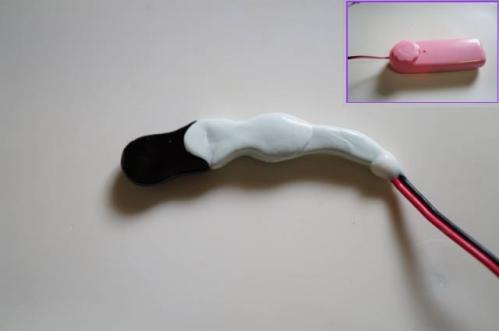
| Short ceramic vibrating chip (OKプロステート核振チップ 陶器素材ショートタイプ) | ¥5,500 (about $35 at ¥156 = $1, rate as of 2026-09-04) | In August 2021, the customer's order listed this item alongside a custom-design request and a suggestion for motorized resin chips. |
The short ceramic vibrating chip is listed in OK Lab's own online store.
(Source: ok-lab's diary, published August 2021)
https://ok-lab.hatenablog.com/entry/2021/08/07/125807
Products the diary mentioned as alternatives
The diary names no alternative.
The May–August 2021 entries also describe resin prototypes, a proposed titanium chip, and a custom short ceramic twist vibrating chip. No matching product can be confirmed on the current list.
Common worries about biocompatible resin chips
The reader questions concern prolonged use, softer materials, and thread connections that could make removal difficult.
"Can biocompatible resin chips stay in for a month?"
A customer asked about leaving a chip in place for 1 month in an entry published in May 2021. They asked whether the absence of pain, bleeding, or other abnormalities made extended use acceptable. Their question concerned chips they already used, while the reply also discussed materials under development.
Mr. Okada replied that the chips then available had no scientific guarantee. The diary does not record whether this customer attempted month-long use or how it went. His answer left duration to the user's judgment and responsibility.
(Source: ok-lab's diary, published May 2021)
https://ok-lab.hatenablog.com/entry/2021/05/01/130245
"Were biocompatible resin chips also planned in silicone?"
A reply published in June 2021 said silicone chips were not planned. The designer could not obtain medical-grade silicone (silicone intended for medical use) at the scale of an individual maker. Mr. Okada recalled prices nearly 2 orders of magnitude different from industrial silicone during an attempted purchase about 10 years earlier.
He said the intermediary sent delay notices for about 3 months, then stopped responding. The designer instead planned rubber-like resin trials, with successful printing, strength, and flexibility all unknown. He asked readers to keep expectations low while waiting for those trials.
(Source: ok-lab's diary, published June 2021)
https://ok-lab.hatenablog.com/entry/2021/06/26/125926
"Could biocompatible resin chips have thread holes at both ends?"
In an entry published in June 2021, the designer said thread holes at both ends were possible, depending on the chip's size. A loop with the chip between its ends was technically possible. However, he expected removal difficulties if the nearer thread end broke, even with the other end intact.
He explained that the remaining connection could exert a force turning the chip lengthwise inside the urethra. The diary does not record a finished retail version of this proposal. The designer advised against the design and considered it unsuitable for sale.
(Source: ok-lab's diary, published June 2021)
https://ok-lab.hatenablog.com/entry/2021/06/26/125926
Buying from outside Japan

OK Lab ships internationally to countries covered by Japan Post's EMS courier service. Overseas orders are paid in advance by PayPal. Each order carries a ¥400 (about $3 at ¥156 = $1, rate as of 2026-09-04) handling fee, and EMS shipping is charged on top. These terms come from OK Lab's official sales-terms page (written here as plain text, not a link: ok-lab.net/docs/law), checked on September 7, 2026; confirm them on the official store before you order, because they can change.
Summary of this article
| What you wanted to know | The answer |
|---|---|
| What is the immediate answer? | Early resin reports were promising, but they did not establish a safe duration for prolonged use. |
| What is this product? | A small urethral device made and sold by OK Lab in Japan. |
| What does biocompatible resin mean here? | The body-contact material Mr. Okada described for the developing chips. |
| What happened during testing? | Mr. Okada reported improved comfort and flexible connections, while chip movement remained unresolved. |
| How did development address problems? | Through material experiments, formal manufacturing support, and rejection of concerning thread connections. |
| What changed over time? | Reports progressed from initial resin prototypes to proposed motor waterproofing. |
| What related product is currently listed? | The short ceramic vibrating chip, at ¥5,500 (about $35 at ¥156 = $1, rate as of 2026-09-04) including tax. |
| What did customers ask? | About month-long use, softer materials, and alternative thread arrangements. |
| How does overseas buying work? | Advance PayPal payment, a ¥400 (about $3 at ¥156 = $1, rate as of 2026-09-04) handling fee, and additional EMS shipping charges. |
| What does the article establish overall? | It documents development decisions and personal reports, with several outcomes still unrecorded. |
Source: ok-lab's diary (Okada Comfortable Life Laboratory). The original entries are in Japanese; quotations on this page are translated. Photos and videos are on the original entries.
This article is a summary of the maker's development diary. The product is not a medical device and no result is guaranteed. If anything feels wrong or worries you, see a doctor. Prices, specifications and cautions change, so confirm the latest information on the official blog and the official site. Questions about ordering and shipping go to the seller.