![Can a ceramic prostate chip break? | Wire reinforcement aims to keep pieces connected [OK Prostate Chip]](/img/a/T0826/eyecatch.svg)
This page is based on entries from "ok-lab's diary" (https://ok-lab.hatenablog.com/), the Japanese development diary written by Mr. Okada, founder of OK Lab, a small company in Japan (Okada Comfortable Life Laboratory). Only the entries about "ceramic chip reinforcement" are summarized here, in order of publication. Past prices and sizes are as written at the time. Current prices come from the official product list (retrieved September 4, 2026). Quotations are translated from Japanese.
Note: This page is a personal reading log by someone with no connection to the maker or the seller. It reflects the source entries as of their publication dates and makes no guarantee of accuracy or safety. The product is not a medical device; talk to a doctor about any health decision. Check the official site for current information. This page contains advertising.
In short
- Ceramic can still crack; Mr. Okada developed reinforcement after a broken tip remained inside a customer's bladder.
- The maker proposes bonded wire to hold pieces together, and staff offer inspection when coating damage is unclear.
- August 2026 designs used finer wires; the current product list does not separately identify a reinforcement option.
If you see blood in your urine, even a small amount or for the first time, do not wait and see. See a urologist right away. If you suddenly cannot urinate, or the device cannot be removed, do not try to fix it yourself. Go to a medical facility, including emergency care, immediately.
About this product
The OK Prostate Chip is a small device that is placed in the urethra (the urine passage) so that it acts on the prostate; the maker sells it in several shapes, sizes and materials. It is made and sold by OK Lab (Okada Comfortable Life Laboratory), a small company in Japan, through its own online store, and prices are in Japanese yen (JPY). The maker's development diary, "ok-lab's diary", is written in Japanese. This page is an English summary of it, and every quotation is translated. OK Lab ships internationally, so readers outside Japan can order (see "Buying from outside Japan" below). Product names on this page are plain-English descriptions. The official Japanese product name is shown once in the product table so you can find the same item in the store.
Before you read: key terms
| Term | Plain-English meaning |
|---|---|
| Ceramic chip reinforcement | Bonded wire intended to keep broken ceramic parts connected. |
| Urethra | The urine passage, where the diary describes the chip being placed. |
| Shape-memory wire | Wire described as retaining a set shape; used here for reinforcement and flexible connections. |
| Nitinol thread | The diary's name for very thin shape-memory wire, used for reinforcement and connections. |
| Silicone | A bonding material used to attach reinforcement wire to ceramic. |
| Epoxy resin | A covering over reinforced areas, used to cover the bond and improve sliding. |
| Integrated stopper | A fitting attached directly to a chip, intended to limit its movement inside the body. |
| Dual chip | Two ceramic chips joined through a flexible section, intended to function as a connected device. |
What happens: ceramic chip reinforcement
The OK Prostate Chip is a device placed in the urethra (urine passage) to act on the prostate. Ceramic chip reinforcement uses shape-memory wire (wire that retains a set shape) bonded along the ceramic body's sides. Mr. Okada developed it to keep broken pieces connected, including tips that might otherwise remain inside the body. The diary records changes to the wire, its covering, and connected fittings.
Ceramic chip reinforcement followed a difficult bladder retrieval case
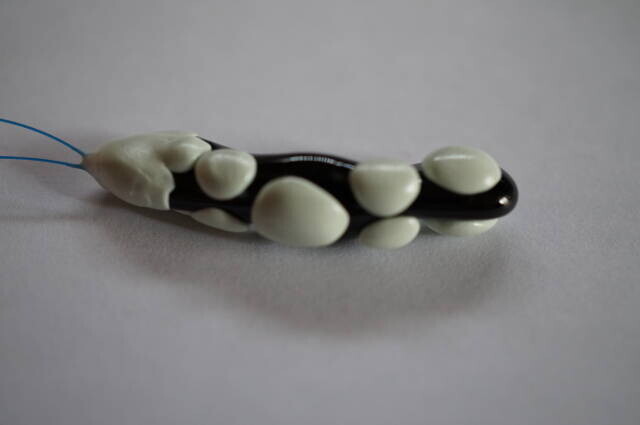
In an entry published in June 2025, Mr. Okada recalled a broken ceramic tip remaining in a customer's bladder. The complex tip came from a ceramic chip, sea slug version 2 (Umiushi 2), and proved difficult to retrieve. A doctor eventually removed it successfully.
Mr. Okada suspected an unnoticed crack without establishing the cause. He believed wire reinforcement could prevent separation after cracking and overcome the risk of a tip remaining inside. His proposed safeguard was reinforcement, while acknowledging that ceramic could still crack.
(Source: ok-lab's diary, published June 2025)
https://ok-lab.hatenablog.com/entry/2025/06/07/122954
Ceramic chip reinforcement survived some drop tests, but damage still occurred
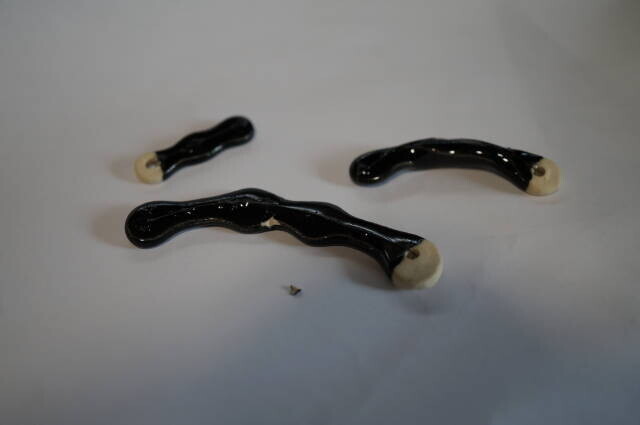
In the June 2025 entry, Mr. Okada reported that 0.2 mm shape-memory wire bonded firmly to both ceramic sides without peeling. Silicone (the bonding material) held it; epoxy resin (an outer covering) was omitted from the drop-test samples so damage remained visible. The short, semi-long twisted, and long samples survived a fall of 1 meter onto wood.
At 1.5 meters, the long sample shed small fragments, while the other samples remained undamaged. Mr. Okada said its reinforcement still held the damaged sample together. He adopted side reinforcement after abandoning a rubber-only coating trial within a day.
(Source: ok-lab's diary, published June 2025)
https://ok-lab.hatenablog.com/entry/2025/06/07/122954
Ceramic chip reinforcement also supported fittings without a tip hole
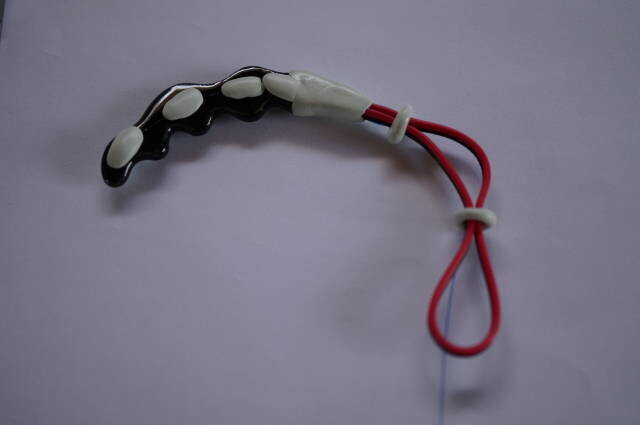
In an entry published in September 2025, Mr. Okada extended nitinol thread (very thin shape-memory wire) from ceramic reinforcement into a wing-shaped fitting. He intended the wings to remain in the bladder and hold the chip in place. The continuous wire meant a ceramic tip needed no attachment hole.
The combined reinforcement and wing fitting cost ¥4,000 (about $26 at ¥156 = $1, rate as of 2026-09-04) excluding tax for wings up to 40 mm, as published that month. Mr. Okada proposed this connected design for ordinary ceramic chips lacking a tip hole.
(Source: ok-lab's diary, published September 2025)
https://ok-lab.hatenablog.com/entry/2025/09/20/122912
Ceramic chip reinforcement became the basis for flexible paired designs
In an entry published in January 2026, Mr. Okada described a dual chip (two ceramic chips joined through a flexible section). Wire bonded along their sides connected both ceramic bodies through a section with four joints. Its double 0.2 mm wire construction targeted a bend of about 90 degrees, with variation between pieces.
The quoted addition was ¥6,000 (about $38 at ¥156 = $1, rate as of 2026-09-04) excluding tax beyond the two chips' prices, with about two weeks as the shortest lead time. Mr. Okada preferred matching ceramic shapes, although he also allowed different chips in the pair.
(Source: ok-lab's diary, published January 2026)
https://ok-lab.hatenablog.com/entry/2026/01/10/122922
Ceramic chip reinforcement became standard after a connector's failure history
In an entry published in January 2026, Mr. Okada revisited the custom paired ceramic chip called sea slug version 5 (Umiushi 5). He reported earlier connector failures, followed by no further reports after limiting bends to about 45 degrees. The new design replaced the cord inside the connector with nitinol wire.
Reinforcement became standard, with wire extending along the sides. Mr. Okada said this attachment made the connection thinner. He made full reinforcement the default, while allowing a shorter bonded section when customers declined it.
(Source: ok-lab's diary, published January 2026)
https://ok-lab.hatenablog.com/entry/2026/01/31/122917
Ceramic chip reinforcement prototypes were explicitly outside the February sales plan
In an entry published in February 2026, Mr. Okada explored a structure combining two nylon threads and two nitinol wires. He believed a connection supported by 4 strands could hold the structure together despite ceramic damage. He presented both a ceramic prototype and a blue resin prototype.
For the ceramic example, the threads and wires extended along the sides; the blue resin example used internal passages. Mr. Okada said there were no plans to sell these experimental builds at that time.
(Source: ok-lab's diary, published February 2026)
https://ok-lab.hatenablog.com/entry/2026/02/28/122912
Ceramic chip reinforcement gained a broken-line resin covering in August
In an entry published in August 2026, Mr. Okada presented reinforcement with resin sections separated by gaps. Very fine wire ran along the chip and remained exposed between those sections. He considered this finish more attractive than an uninterrupted resin line.
The sea slug version 2 prototype had raised sections comparable to existing bumps; the sea slug version 4 prototype had a thinner covering. Mr. Okada presented the design with its detailed specifications, including wire thickness, still undecided.
(Source: ok-lab's diary, published August 2026)
https://ok-lab.hatenablog.com/entry/2026/08/08/122906
The maker's answer to ceramic chip reinforcement
Mr. Okada's approach combines bonded wire with coverings, while requirements depend on the chip's shape and attached fittings.
Ceramic chip reinforcement became cheaper when thinner wire simplified production
In June 2025, the published reinforcement surcharge was ¥2,000 (about $13 at ¥156 = $1, rate as of 2026-09-04), regardless of the difficulty of the ceramic shape. By an entry published in August 2025, Mr. Okada found 0.1 mm nitinol thread much easier to work with. He reduced the charge from ¥2,000 (about $13 at ¥156 = $1, rate as of 2026-09-04) excluding tax to ¥1,000 (about $6 at ¥156 = $1, rate as of 2026-09-04) excluding tax because production required fewer steps.
This remained a surcharge. Chips with bumps could also receive reinforcement. Mr. Okada advised prioritizing reinforcement as a ceramic safeguard, even suggesting it instead of paying for bumps.
(Source: ok-lab's diary, published June 2025)
https://ok-lab.hatenablog.com/entry/2025/06/07/122954
(Source: ok-lab's diary, published August 2025)
https://ok-lab.hatenablog.com/entry/2025/08/30/122943
Ceramic chip reinforcement was required for front stoppers, with rear-only exceptions
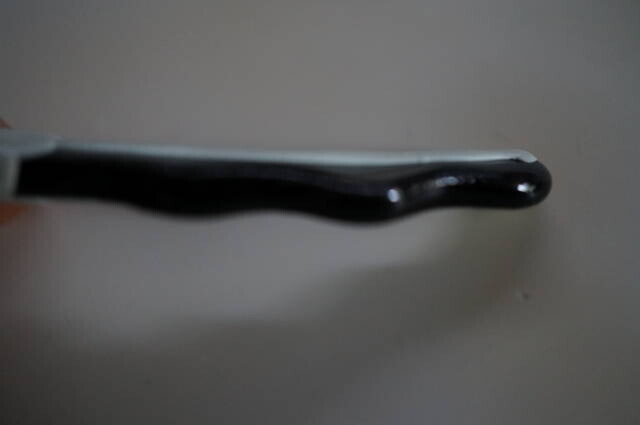
In entries published in October 2025, Mr. Okada distinguished requirements for an integrated stopper (a fitting attached directly to limit chip movement). A rear-only fitting could attach through the existing rear hole without side reinforcement. Its corrected charge was ¥2,000 (about $13 at ¥156 = $1, rate as of 2026-09-04) excluding tax. For a stopper at the tip, Mr. Okada required side reinforcement using 0.15 mm wire.
(Source: ok-lab's diary, published October 2025)
https://ok-lab.hatenablog.com/entry/2025/10/04/122910
(Source: ok-lab's diary, published October 2025)
https://ok-lab.hatenablog.com/entry/2025/10/11/123003
Ceramic chip reinforcement on twisted shapes involved gaps beneath the wire
In an entry published in June 2026, the maker explained why wire could sit away from a twisted ceramic surface. Rubber provided the bond beneath those areas, with epoxy above it to improve sliding. Rubber could extend beyond the epoxy because the materials spread differently.
The reply described some rubber exposure as a technical limit of keeping the finished chip from becoming too bulky. The reply also characterized exposed wire as no strength problem. The maker offered extra epoxy coverage for exposed-wire areas that concerned the customer.
(Source: ok-lab's diary, published June 2026)
https://ok-lab.hatenablog.com/entry/2026/06/20/122903
If you see blood in your urine, even a small amount or for the first time, do not wait and see. See a urologist right away. If you suddenly cannot urinate, or the device cannot be removed, do not try to fix it yourself. Go to a medical facility, including emergency care, immediately.
How ceramic chip reinforcement changed over time
| Published | What the diary said then |
|---|---|
| Jun 2025 | Side-bonded wire was adopted after rubber coating alone was judged inadequate. |
| Aug 2025 | Thinner thread shortened production and reduced the reinforcement charge. |
| Sep 2025 | Wire inside a paired-chip connector was withheld pending sufficient testing. |
| Oct 2025 | Rear-only integrated stoppers no longer required side reinforcement under the corrected specification. |
| Jan 2026 | Flexible ceramic builds were limited to untextured models; sea slug version 4 remained deferred. |
| Jan 2026 | The revised paired ceramic design used a wire core and standard reinforcement. |
| Feb 2026 | Four-part ceramic and blue resin connections remained prototypes without sales plans. |
| Jun 2026 | A customer reported coating damage; staff offered assessment and possible repair. |
| Aug 2026 | Broken-line resin coverage appeared, with detailed specifications still undecided. |
| Aug 2026 | Wire specifications became 0.03 mm for twisted ceramic and 0.05 mm for flat ceramic. |
OK Prostate Chip products related to ceramic chip reinforcement
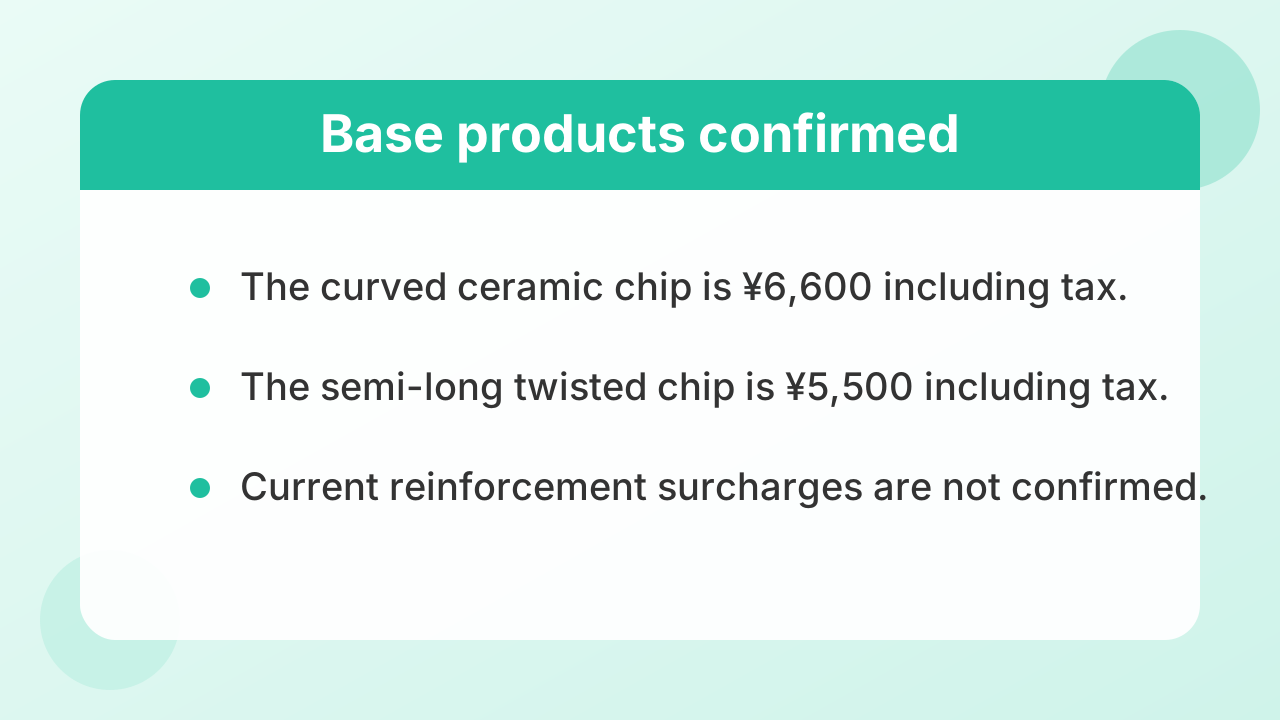
The list confirms ceramic base products, without separately confirming historical reinforcement builds or their current surcharges.
Products that appear in these entries
| Product (official name) | Price incl. tax | Relation to this topic |
|---|---|---|
| Curved ceramic chip (OKプロステートチップ 陶器素材覚醒勾玉タイプ) | ¥6,600 (about $42 at ¥156 = $1, rate as of 2026-09-04) | In July 2025, a customer requested this ceramic shape with wire reinforcement and added surface dots. |
| Semi-long twisted ceramic chip (OKプロステートチップ 陶器素材セミロングタイプ コブラツイスト) | ¥5,500 (about $35 at ¥156 = $1, rate as of 2026-09-04) | In June 2026, a customer reported damaged coating on a reinforced example of this base product. |
(Source: ok-lab's diary, published July 2025)
https://ok-lab.hatenablog.com/entry/2025/07/12/122911
(Source: ok-lab's diary, published June 2026)
https://ok-lab.hatenablog.com/entry/2026/06/20/122903
Products the diary mentioned as alternatives
| Product (official name) | Price incl. tax | Relation to this topic |
|---|---|---|
| Long ceramic chip (OKプロステートチップ 陶器素材ロングタイプ) | ¥6,600 (about $42 at ¥156 = $1, rate as of 2026-09-04) | In August 2026, staff offered this flat base for raised reinforcement while the requested twisted design awaited testing. |
(Source: ok-lab's diary, published August 2026)
https://ok-lab.hatenablog.com/entry/2026/08/15/122912
Custom sea slug builds, paired designs, experimental prototypes, and historical reinforcement options: No matching product can be confirmed on the current list.
Mr. Okada reported in January 2026 that earlier thread-linked glass pairs had been discontinued because their threads tangled.
(Source: ok-lab's diary, published January 2026)
https://ok-lab.hatenablog.com/entry/2026/01/10/122922
Common worries about ceramic chip reinforcement
The reader questions concern custom shapes, damaged coverings, and the feasibility of requested finishes.
"Can ceramic chip reinforcement accompany a curved chip and surface dots?"
In an entry published in July 2025, a customer requested reinforcement on a large curved ceramic chip with added surface dots. The diary supplied a quote of ¥6,600 (about $42 at ¥156 = $1, rate as of 2026-09-04) for the chip, ¥2,200 (about $14 at ¥156 = $1, rate as of 2026-09-04) for reinforcement, and ¥1,100 (about $7 at ¥156 = $1, rate as of 2026-09-04) for the dots. The quote included both reinforcement and the dotted finish. The diary does not record whether the order was completed.
(Source: ok-lab's diary, published July 2025)
https://ok-lab.hatenablog.com/entry/2025/07/12/122911
"Is ceramic chip reinforcement still usable when its coating peels?"
In an entry published in June 2026, a customer reported peeling epoxy after 2 uses of a reinforced semi-long twisted ceramic chip. Adhesive and nitinol thread were exposed, prompting questions about continued use or replacement. Staff said their resin-and-rubber construction meant one material peeling was not, in their view, necessarily a major problem.
However, staff could not judge usability from the description, and no completed inspection or repair outcome appears in the material. They offered return inspection and repair if the condition interfered with use.
(Source: ok-lab's diary, published June 2026)
https://ok-lab.hatenablog.com/entry/2026/06/20/122903
"Can ceramic chip reinforcement add raised sections to twisted shapes?"
In an entry published in August 2026, a customer requested raised reinforcement on a long ceramic chip with four twists. Staff initially offered a flat long ceramic chip because the twisted version still needed testing. The customer accepted that alternative, then changed their mind and chose to await the twisted result.
Mr. Okada produced a shell-like finish whose bumps followed the crossing wires. The diary does not record the customer's experience with it. Mr. Okada offered different bump heights, although the wire paths largely fixed their positions.
(Source: ok-lab's diary, published August 2026)
https://ok-lab.hatenablog.com/entry/2026/08/15/122912
Buying from outside Japan
OK Lab ships internationally to countries covered by Japan Post's EMS courier service. Overseas orders are paid in advance by PayPal. Each order carries a ¥400 (about $3 at ¥156 = $1, rate as of 2026-09-04) handling fee, and EMS shipping is charged on top. These terms come from OK Lab's official sales-terms page (written here as plain text, not a link: ok-lab.net/docs/law), checked on September 7, 2026; confirm them on the official store before you order, because they can change.
Summary of this article
| What you wanted to know | The answer |
|---|---|
| What is the short answer? | Reinforcement aims to keep broken ceramic connected; cracking and covering damage are recorded. |
| What is the product? | A urethral device from OK Lab in Japan, priced in Japanese yen. |
| What do the terms mean? | Bonded wire provides reinforcement; silicone and epoxy form parts of the attachment and covering. |
| What happened in these entries? | A difficult retrieval prompted wire experiments, followed by connected fittings and flexible prototypes. |
| What does the maker propose? | Reinforcement suited to the shape, and inspection when coating damage cannot be assessed remotely. |
| What changed over time? | Wire thickness, charges, attachment requirements, connector designs, and resin coverage changed between 2025 and 2026. |
| What is on the current list? | Named ceramic base products appear; historical custom reinforcement specifications are not separately confirmed. |
| What did customers ask? | Curved shapes, peeling coatings, and raised reinforcement on twisted ceramic. |
| How do overseas orders work? | Advance PayPal payment, a ¥400 (about $3 at ¥156 = $1, rate as of 2026-09-04) handling fee, and additional EMS shipping. |
Source: ok-lab's diary (Okada Comfortable Life Laboratory). The original entries are in Japanese; quotations on this page are translated. Photos and videos are on the original entries.
This article is a summary of the maker's development diary. The product is not a medical device and no result is guaranteed. If anything feels wrong or worries you, see a doctor. Prices, specifications and cautions change, so confirm the latest information on the official blog and the official site. Questions about ordering and shipping go to the seller.