![Do glass prostate chips slide better? | The maker reports less friction, with limits [OK Prostate Chip]](/img/a/T0787/eyecatch.svg)
This page is based on entries from "ok-lab's diary" (https://ok-lab.hatenablog.com/), the Japanese development diary written by Mr. Okada, founder of OK Lab, a small company in Japan (Okada Comfortable Life Laboratory). Only the entries about glass chips sliding more easily are summarized here, in order of publication. Past prices and sizes are as written at the time. Current prices come from the official product list (retrieved September 4, 2026). Quotations are translated from Japanese.
Note: This page is a personal reading log by someone with no connection to the maker or the seller. It reflects the source entries as of their publication dates and makes no guarantee of accuracy or safety. The product is not a medical device; talk to a doctor about any health decision. Check the official site for current information. This page contains advertising.
In short
- Mr. Okada reports less friction with glass, but smoother chips can also slip away from their intended position.
- His answers address shape, material, and exposed glass, while warning about discomfort and breakage.
- The current list includes semi-long and long chips; the historical custom versions are not confirmed.
If you see blood in your urine, even a small amount or for the first time, do not wait and see. See a urologist right away. If you suddenly cannot urinate, or the device cannot be removed, do not try to fix it yourself. Go to a medical facility, including emergency care, immediately.
About this product

The OK Prostate Chip is a small device that is placed in the urethra (the urine passage) so that it acts on the prostate; the maker sells it in several shapes, sizes and materials. It is made and sold by OK Lab (Okada Comfortable Life Laboratory), a small company in Japan, through its own online store, and prices are in Japanese yen (JPY). The maker's development diary, "ok-lab's diary", is written in Japanese. This page is an English summary of it, and every quotation is translated. OK Lab ships internationally, so readers outside Japan can order (see "Buying from outside Japan" below). Product names on this page are plain-English descriptions. The official Japanese product name is shown once in the product table so you can find the same item in the store.
Before you read: key terms
| Term | Plain-English meaning |
|---|---|
| Urethra | The urine passage; the chip is intended to act on the prostate from within it. |
| Lubricant | A substance used to reduce resistance as a device moves. |
| Silicone | A material tested for chips; Mr. Okada described difficulties with repeated friction after moisture disappeared. |
| Resin | A material used for chips and coverings around connections; the diary compares its sliding behavior with glass. |
| Urinary catheter | A medical tube for draining urine, discussed because one customer used it alongside a chip. |
| Bulbar urethra | A section of the urine passage where chips may slip; its specific bodily function: The diary does not explain this. |
| Electronic controller | A component that changes a motor's vibration pattern; Mr. Okada tested its effects with glass chips. |
| Swan-shaped hook | An experimental curved device intended to hold the penis drawn inward through a connection near the prostate. |
| Retaining fitting | An external part directly connected to the experimental hook, intended to help maintain that inward position. |
What happens: glass chip friction
The OK Prostate Chip is a small device placed in the urethra to press on the prostate. Glass forms the body of several chips discussed in these entries, including short, linked, semi-long, and long designs. Mr. Okada describes its smoothness as useful for movement when little moisture remains. The same quality also appears in questions about the chip slipping away from its intended position near the prostate.
Glass chip friction became the deciding issue after lubricant disappeared
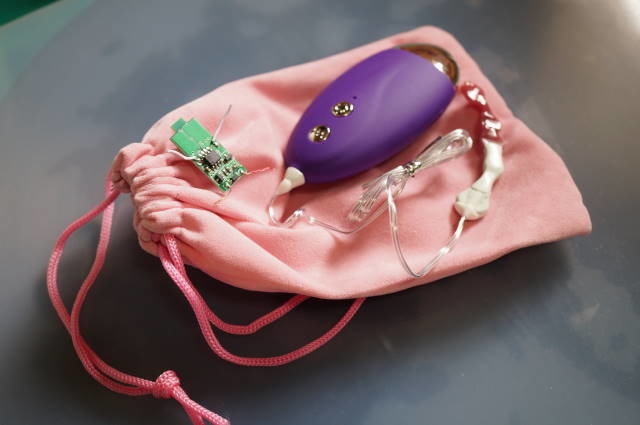
In an October 2017 entry, Mr. Okada described lubricant (a substance reducing sliding resistance) disappearing from a chip about 25 mm long. Without natural moisture, he said, most lubricant disappeared within 5 cm, slowing movement. Silicone (a material tested for chips) struggled with repeated friction after drying; resin (another chip material) disappointed him over days.
After urination washed lubricant away, he reported finding only glass smooth enough with the remaining urine moisture. He therefore considered glass essential for continuous, long periods in the prostate region. Nevertheless, he warned that the chip could break and that complete safety was impossible.
(Source: ok-lab's diary, published October 2017)
https://ok-lab.hatenablog.com/entry/20171005/1507210406
Lower glass chip friction did not remove a catheter's need for lubricant
A report published in February 2018 concerned a customer who had difficulty getting chips to the intended position. The customer reported successful placement with assistance from a urinary catheter (a medical tube for draining urine). The customer described the glass chip as moving more smoothly than a catheter alone.
However, the same report said lubricant remained necessary because the catheter itself created friction. Mr. Okada said he could not test the account with an actual catheter, which he had never purchased. He regarded instrument assistance as temporary and favored an approach without another instrument.
(Source: ok-lab's diary, published February 2018)
https://ok-lab.hatenablog.com/entry/20180224/1519457027
Lower glass chip friction could not solve every custom manufacturing problem
In an entry published in September 2018, Mr. Okada discussed custom rectal chips, a separate design from the urethral product. He believed glass offered better sliding, but precise customer designs exceeded his glassworking skills and the burner he was using. Resin was the material he thought could accommodate the requested shapes and measurements.
He raised the possibility of consulting a glass craftsperson if there was sufficient interest. The diary does not record whether that specialist work went ahead. His proposed material for those detailed custom designs was resin.
(Source: ok-lab's diary, published September 2018)
https://ok-lab.hatenablog.com/entry/20180908/1536384939
Lower glass chip friction appealed to Mr. Okada for programmed vibration
In an entry published in February 2019, Mr. Okada compared vibrating glass and resin chips. He described glass as moving more freely, while resin performed somewhat less well because it did not slide as easily. The setup included an electronic controller (a component that changes a motor's vibration pattern).
He thought the combination of programmed vibration and smooth glass conveyed finer changes in sensation. He compared the effects he felt with tapping, kneading, and pressing sensations from equipment he had previously used. Mr. Okada favored glass for experiencing those small changes in vibration.
(Source: ok-lab's diary, published February 2019)
https://ok-lab.hatenablog.com/entry/2019/02/16/171153
Lower glass chip friction did not justify recommending the hook prototype
In an entry published in February 2023, Mr. Okada described a swan-shaped hook (an experimental curved device intended to hold the penis drawn inward). He reported easier placement with glass, while he had not successfully placed the pictured resin prototype. The hook connected directly to a retaining fitting (an external part intended to maintain that inward position).
He said this connection exposed the hook to completely different forces from the glass prostate chip. He was considering ceramic instead, but the entry still described unresolved development problems. Because glass could break under those forces, Mr. Okada said he could not recommend the glass hook to customers.
(Source: ok-lab's diary, published February 2023)
https://ok-lab.hatenablog.com/entry/2023/02/04/122938
The maker's answer to glass chip friction
Mr. Okada addressed smoothness and unwanted slipping through different shapes, materials, and the amount of exposed glass.
Glass chip slipping led Mr. Okada to compare linked and long shapes
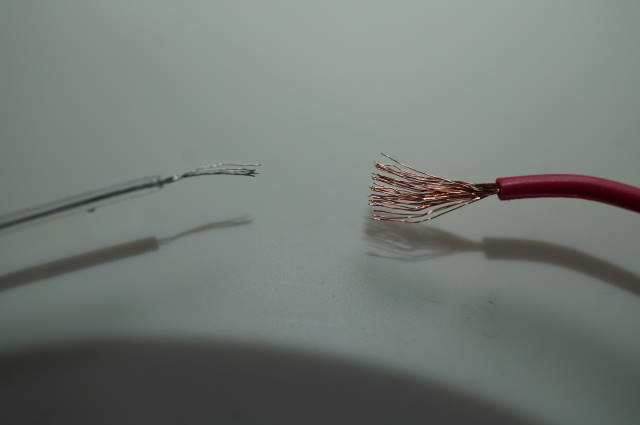
In his May 2018 reply, Mr. Okada compared short, linked, and semi-long glass designs for a customer concerned about slipping. Of those 3 designs, he thought the linked chip was relatively more likely to stay in place. For stable placement in glass, Mr. Okada identified the long model as the only option.
(Source: ok-lab's diary, published May 2018)
https://ok-lab.hatenablog.com/entry/20180519/1526708081
Reducing glass chip slipping with a deeper narrowing brought another limitation
In his May 2018 reply, Mr. Okada also discussed a semi-long glass design with a much deeper narrowing. He said this shape could remain in place except during urination. However, he said prolonged wear put too much strain on the surrounding muscle.
This was a particular shaped version, separate from his description of the ordinary semi-long chip. His stated limit for continuous wear was about half a day.
(Source: ok-lab's diary, published May 2018)
https://ok-lab.hatenablog.com/entry/20180519/1526708081
Resin was his conditional alternative when glass chip slipping remained troublesome
Mr. Okada's May 2018 reply offered a custom resin chip about the length of a semi-long model. He thought a longer resin design would be less likely to come out than glass. This suggestion addressed the customer's difficulty keeping the chip in place.
No completed custom order or result from that proposed resin design is recorded in this exchange. Mr. Okada limited his suggestion to someone who had experienced no problems with resin.
(Source: ok-lab's diary, published May 2018)
https://ok-lab.hatenablog.com/entry/20180519/1526708081
Version 2 addressed glass chip friction by exposing more rounded surfaces
In an entry published in March 2019, Mr. Okada introduced version 2 of the vibrating chip. Earlier construction had required resin to cover the final rounded glass section fully, to secure the connection. The revision used a covering shaped like a sleeveless top, leaving the bulging glass surface exposed.
He described this change across the short, semi-long, long, and single-bulge designs. Mr. Okada reported considerably better sliding after the change. His design answer was a smaller area of covering while retaining the connection between glass and resin.
(Source: ok-lab's diary, published March 2019)
https://ok-lab.hatenablog.com/entry/2019/03/23/173222
If you see blood in your urine, even a small amount or for the first time, do not wait and see. See a urologist right away. If you suddenly cannot urinate, or the device cannot be removed, do not try to fix it yourself. Go to a medical facility, including emergency care, immediately.
How glass chip friction changed over time
| Published | What the diary said then |
|---|---|
| Oct 2017 | Lubricant loss led Mr. Okada to favor glass despite its breakage risk. |
| Oct 2017 | His reply acknowledged residual friction and advised stopping if discomfort appeared. |
| Feb 2018 | A disappearing-thread report prompted warnings about instruments and excessive depth. |
| May 2018 | A slipping complaint brought comparisons between linked, long, narrowed, and resin designs. |
| Sep 2018 | Custom rectal designs exceeded his available glassworking capabilities. |
| Feb 2019 | He favored smooth glass for conveying changes in programmed vibration. |
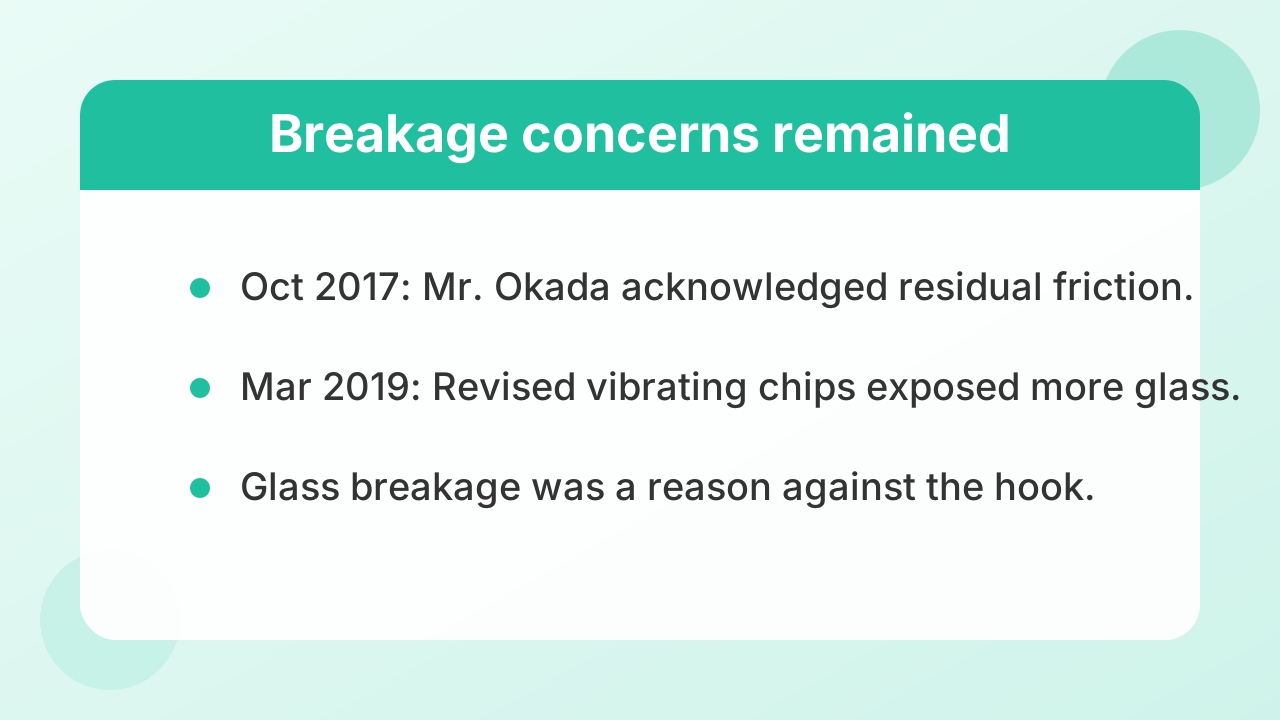
| Mar 2019 | Revised vibrating chips exposed more glass, reportedly improving sliding. |
| Feb 2023 | Direct attachment made glass breakage a reason against recommending the hook prototype. |
The last supplied entry discusses the hook prototype in February 2023. The diary does not say what the current state is.
OK Prostate Chip products related to glass chip friction
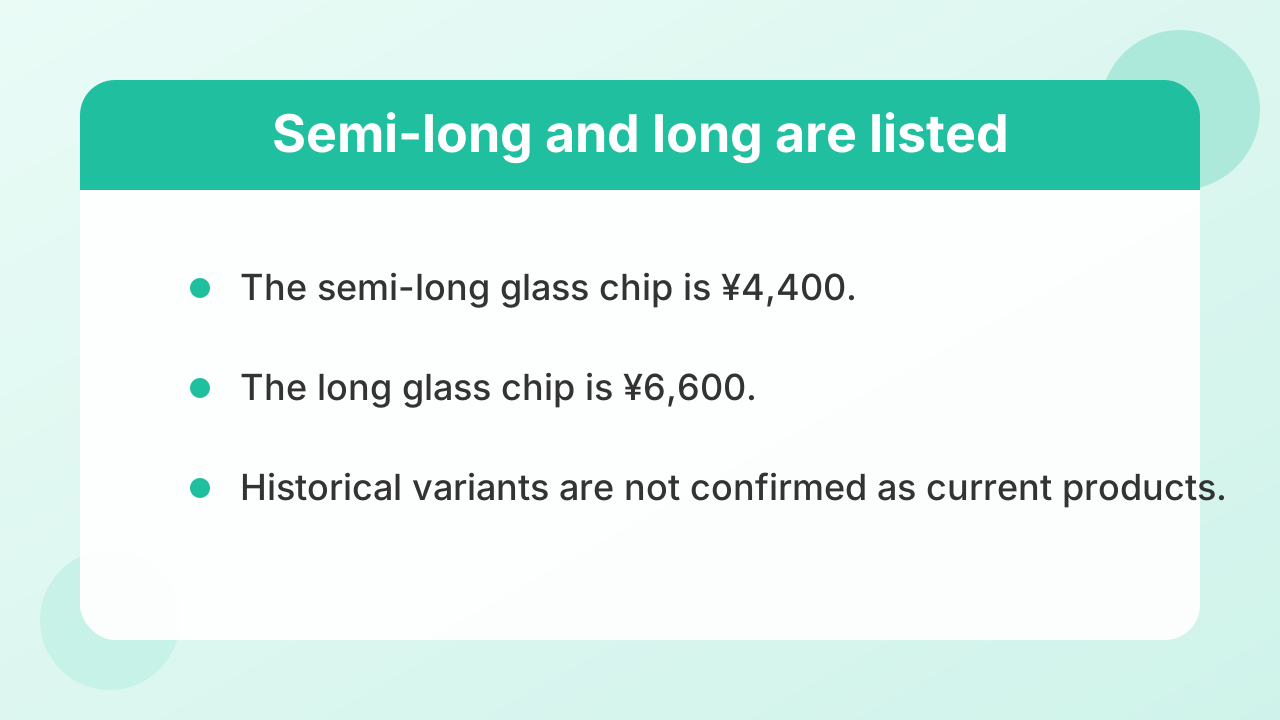
The current list includes the semi-long glass chip discussed in a slipping complaint and the long model named for stability.
Products that appear in these entries
| Product (official name) | Price incl. tax | Relation to this topic |
|---|---|---|
| Semi-long glass chip (OKプロステートチップ ガラス素材セミロングタイプ) | ¥4,400 (about $28 at ¥156 = $1, rate as of 2026-09-04) | In May 2018, a customer reported that this design slipped down more readily than a previously used linked resin chip. |
The semi-long glass chip is listed in OK Lab's own online store.
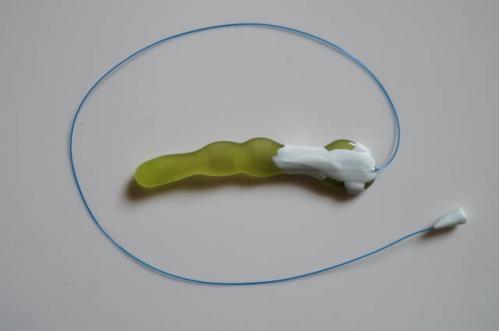
(Source: ok-lab's diary, published May 2018)
https://ok-lab.hatenablog.com/entry/20180519/1526708081
Products the diary mentioned as alternatives
| Product (official name) | Price incl. tax | Relation to this topic |
|---|---|---|
| Long glass chip (OKプロステートチップ ロングタイプ) | ¥6,600 (about $42 at ¥156 = $1, rate as of 2026-09-04) | In May 2018, Mr. Okada named the long model for stable placement in response to a semi-long chip slipping down. |
The long glass chip is listed in OK Lab's own online store.
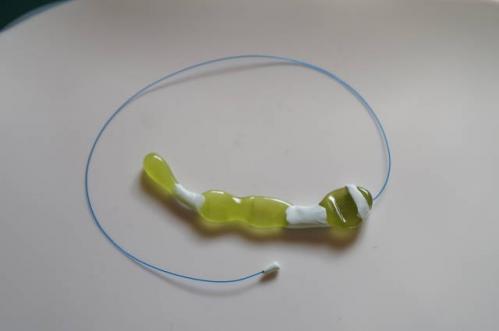
(Source: ok-lab's diary, published May 2018)
https://ok-lab.hatenablog.com/entry/20180519/1526708081
Historical variants discussed here include the 20 cm single-chip version, deeply narrowed semi-long design, longer custom resin chip, and vibrating version 2. The early material prototypes, custom rectal designs, and glass hook are also development items. No matching product can be confirmed on the current list.
Common worries about glass chip friction
Readers asked about injury, unexpected inward movement, and difficulty keeping a smooth chip in position.
"Does lower glass chip friction rule out injury?"
In an entry published in October 2017, a reader asked whether the urethra's delicate lining could be injured. Mr. Okada agreed that pain or small amounts of bleeding could appear later, even without immediate discomfort.
He described glass as less irritating than a hospital urinary catheter, while acknowledging that no device produces zero friction. His advice was to stop use if discomfort occurred.
(Source: ok-lab's diary, published October 2017)
https://ok-lab.hatenablog.com/entry/20171026/1508989298
"Could glass chip slipping mean it entered the bladder?"
In an entry published in February 2018, a customer outside Japan described a 20 cm version of the single glass chip. The customer asked whether it had entered the bladder after the thread suddenly disappeared with a sharp sensation. The customer reported that the chip came out soon afterward.
Mr. Okada could not determine whether the whole chip had reached the bladder or had only crossed the muscle boundary. The report did not establish whether another instrument had been used. Mr. Okada warned that instrument assistance greatly increased the possibility of complete bladder entry and cautioned against excessive depth.
(Source: ok-lab's diary, published February 2018)
https://ok-lab.hatenablog.com/entry/20180224/1519457027
"Why does glass chip slipping happen with the semi-long model?"
In an entry published in May 2018, a customer wanted the semi-long glass chip to stay in position more reliably. The customer found it slipped into the bulbar urethra (a section of the urine passage) more readily than a previously used linked resin chip. Mr. Okada replied that short, linked, and semi-long glass chips all slid much more easily than resin.
He described the ordinary semi-long chip as slipping about halfway down, with recurring repositioning forming part of what he considered normal use. The diary does not record a later result for this customer. Mr. Okada's answer was to consider differences between designs when remaining in place was the concern.
(Source: ok-lab's diary, published May 2018)
https://ok-lab.hatenablog.com/entry/20180519/1526708081
Buying from outside Japan

OK Lab ships internationally to countries covered by Japan Post's EMS courier service. Overseas orders are paid in advance by PayPal. Each order carries a ¥400 (about $3 at ¥156 = $1, rate as of 2026-09-04) handling fee, and EMS shipping is charged on top. These terms come from OK Lab's official sales-terms page (written here as plain text, not a link: ok-lab.net/docs/law), checked on September 7, 2026; confirm them on the official store before you order, because they can change.
Summary of this article
| What you wanted to know | The answer |
|---|---|
| What is the short answer? | Mr. Okada reports smoother movement with glass, alongside slipping and breakage concerns. |
| What is this product? | A device made in Japan to act on the prostate from within the urine passage. |
| What do the key terms mean? | Materials, tubing, body locations, and fittings explain the different comparisons in these entries. |
| What happened in development? | Glass helped Mr. Okada address friction, but manufacturing difficulties and breakage concerns remained. |
| What did the maker change or suggest? | Different shapes, conditional resin alternatives, and more exposed glass on vibrating chips. |
| How did the discussion change? | It progressed from lubricant loss to stability, vibration, and an unsuitable glass hook prototype. |
| Which related products are listed now? | Semi-long glass: ¥4,400 (about $28 at ¥156 = $1, rate as of 2026-09-04); long glass: ¥6,600, (about $42 at ¥156 = $1, rate as of 2026-09-04) both including tax. |
| What worried readers? | Injury, a disappearing thread, possible bladder entry, and unwanted slipping. |
| How do overseas orders work? | Advance PayPal payment, a ¥400 (about $3 at ¥156 = $1, rate as of 2026-09-04) handling fee, and additional EMS shipping charges. |
Source: ok-lab's diary (Okada Comfortable Life Laboratory). The original entries are in Japanese; quotations on this page are translated. Photos and videos are on the original entries.
This article is a summary of the maker's development diary. The product is not a medical device and no result is guaranteed. If anything feels wrong or worries you, see a doctor. Prices, specifications and cautions change, so confirm the latest information on the official blog and the official site. Questions about ordering and shipping go to the seller.