![Can the OK Prostate Chip treat urinary problems? | Medical use remains unconfirmed [OK Prostate Chip]](/img/a/T0692/eyecatch.svg)
This page is based on entries from "ok-lab's diary" (https://ok-lab.hatenablog.com/), the Japanese development diary written by Mr. Okada, founder of OK Lab, a small company in Japan (Okada Comfortable Life Laboratory). Only the entries about "possible medical applications" are summarized here, in order of publication. Past prices and sizes are as written at the time. Current prices come from the official product list (retrieved September 4, 2026). Quotations are translated from Japanese.
This article is about possible medical uses of the OK Prostate Chip, and summarizes personal tests, design changes, sales limits, and reader questions. Medical use remains unconfirmed, and no current product is directly tied to this topic.
Note: This page is a personal reading log by someone with no connection to the maker or the seller. It reflects the source entries as of their publication dates and makes no guarantee of accuracy or safety. The product is not a medical device; talk to a doctor about any health decision. Check the official site for current information. This page contains advertising.
In short
The diary records possible medical uses and personal experiments, without establishing treatment effectiveness.
Mr. Okada limited medical sales claims and acknowledged manufacturing problems, electrical hazards, and unresolved design limits.
By May 2026, he still described medical research as a possibility; clinical adoption is not recorded.
About this product
The OK Prostate Chip is a small device that is placed in the urethra (the urine passage) so that it acts on the prostate; the maker sells it in several shapes, sizes and materials. It is made and sold by OK Lab (Okada Comfortable Life Laboratory), a small company in Japan, through its own online store, and prices are in Japanese yen (JPY). The maker's development diary, "ok-lab's diary", is written in Japanese. This page is an English summary of it, and every quotation is translated. OK Lab ships internationally, so readers outside Japan can order (see "Buying from outside Japan" below). Product names on this page are plain-English descriptions. The official Japanese product name is shown once in the product table so you can find the same item in the store.
Before you read: key terms
| Term | Plain-English meaning |
|---|---|
| Urethra | The urine passage; the proposed devices act on or support parts of this passage. |
| Stent | A support intended to hold a passage open; these proposals concern the urethra near the prostate. |
| Balloon catheter | A urine-drainage tube held in the bladder by a balloon. |
| Bulbar urethra | A section of the urine passage used as the apple-shaped stopper’s anchoring location. |
| Electrode | A conductive part intended to deliver electrical stimulation. |
| Polarity control | The diary does not explain this. |
| Heart failure | The diary does not explain this. |
What happens: prostate chip medical use
The OK Prostate Chip is a small device placed in the urethra to act on the prostate. Possible medical uses discussed in the diary include widening the urine passage, supporting urine drainage, and studying sensations around the prostate. Different proposals concern the urethra near the prostate, the bladder, or equipment outside the body that collects urine. Mr. Okada presents these ideas through his own tests and development plans.
Medical use proposals continued after inflammation whose cause remained uncertain
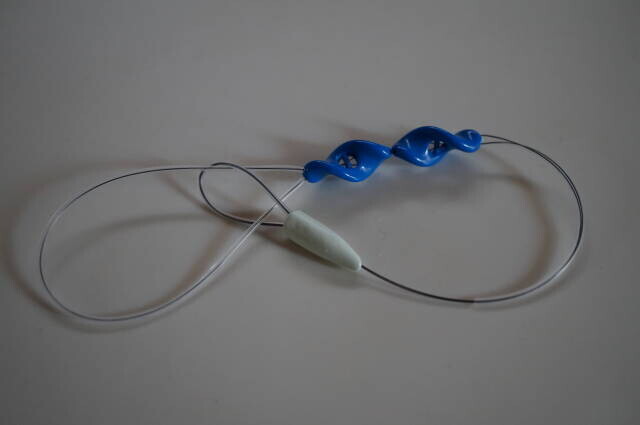
An entry published in November 2017 records Mr. Okada’s diagnosis of urethral inflammation. His doctor knew about his chip use but could not determine whether it caused the illness. Mr. Okada reported recovery and a later normal urine test after about 20 days of daily chip use.
He asked his doctor to explore medical use of a long-chip sample. After the doctor declined involvement in adult-product sales, Mr. Okada proposed manufacturing medical versions through a specialist supplier. The diary does not record whether that proposal led to an agreement.
(Source: ok-lab's diary, published November 2017)
https://ok-lab.hatenablog.com/entry/20171129/1511963864
Bladder vibration prompted medical use speculation after an uncomfortable accident
In an entry published in August 2019, Mr. Okada described accidentally vibrating a chip inside his bladder for about 1 hour. A feeling resembling mild abdominal pain prompted him to end that bladder exposure. He later reported less morning urgency and believed his bladder was holding more urine.
He suggested that urologists might investigate the idea for frequent urination. The diary does not record patient testing of that suggestion.
(Source: ok-lab's diary, published August 2019)
https://ok-lab.hatenablog.com/entry/2019/08/24/125858
Medical use testing resumed after an earlier spring project stopped
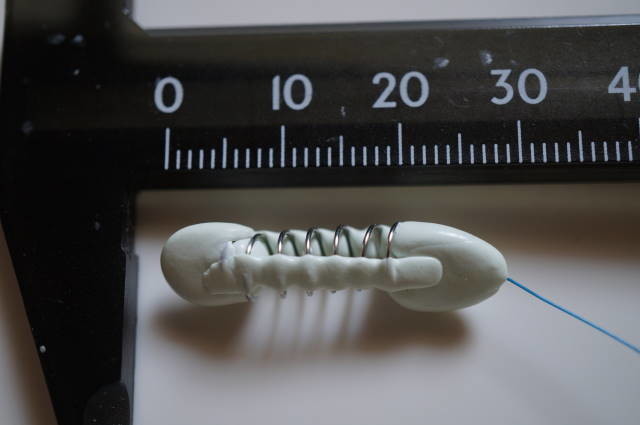
In an entry published in October 2020, Mr. Okada revisited a spring stent (a support intended to keep a passage open). He had stopped earlier tests during worsening heart symptoms. Of around five earlier designs, he now favored one pattern.
He reported that a 9.5mm prototype stayed in place near the prostate and did not move easily. He described the renewed testing as early work, with stability still needing investigation.
(Source: ok-lab's diary, published October 2020)
https://ok-lab.hatenablog.com/entry/2020/10/03/121700
Catheter discomfort shaped another personal comparison relevant to medical use
In an entry published in May 2023, Mr. Okada discussed a balloon catheter (a drainage tube retained by a bladder balloon). He attributed reduced sensitivity at his bladder-side urinary valve to prolonged catheter use during hospitalization.
He felt that an S-shaped urethral rod with a penis-retraction support gave him better stability. This was his personal comparison; the diary does not record a clinical comparison between those approaches.
(Source: ok-lab's diary, published May 2023)
https://ok-lab.hatenablog.com/entry/2023/05/27/122912
Medical use ambitions delayed firm sales plans for bladder loops
In an entry published in August 2025, Mr. Okada described a new 0.2mm wire bladder loop for screw-shaped prototypes. He reported a gentle feel and wondered whether the combination might help urinary obstruction. He deferred that week’s specifications and prices while awaiting advice about intellectual property.
He said sales would be put on hold if the patent adviser thought protection was possible. The diary does not record whether that consultation led to a launch. No matching product can be confirmed on the current list.
(Source: ok-lab's diary, published August 2025)
https://ok-lab.hatenablog.com/entry/2025/08/16/122934
Stable positioning for medical use came with difficult stopper removal
In an entry published in December 2025, Mr. Okada described an apple-shaped stopper for the bulbar urethra (a section of the urine passage). He intended it to resist movement toward either the bladder or the body’s exterior. He reported more flexibility with the separate version, while integrated versions held more firmly but could burden the urethra.
Both versions cost ¥4,000 (about $26 at ¥156 = $1, rate as of 2026-09-04) excluding tax, as published in December 2025; the dedicated urethral rod cost ¥2,000 (about $13 at ¥156 = $1, rate as of 2026-09-04) excluding tax. He also reported difficult removal, with the separate version easier than the integrated design. No matching product can be confirmed on the current list.
(Source: ok-lab's diary, published December 2025)
https://ok-lab.hatenablog.com/entry/2025/12/20/123000
Gentler sensations prompted medical use hopes for a tiny rod
In an entry published in May 2026, Mr. Okada described a micro urethral rod with a 1mm diameter and 40mm spread wings. He reported that it produced sensation without pressure on the urethra, and suggested a possible role in prostate research. The entry describes his assessment, including uncertainty about whether the device would gain acceptance.
The diary does not record a medical study confirming the claimed lack of pressure. No matching product can be confirmed on the current list.
(Source: ok-lab's diary, published May 2026)
https://ok-lab.hatenablog.com/entry/2026/05/23/122904
The maker's answer to prostate chip medical use
Mr. Okada set sales limits and revised designs, while leaving medical effectiveness unresolved.
Medical use hopes did not change the stated sales policy
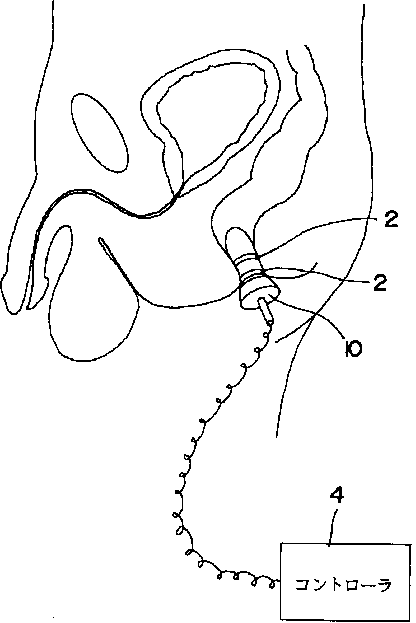
In an entry published in October 2017, Mr. Okada described medical-device approval as a future hope. He said he understood that claiming medical effects when selling the product would violate the law. This was his stated understanding, rather than a recorded regulatory decision.
He planned to begin sales as an adult product or a urethral-cleaning item. He said the company’s own online store would carry no claims of medical effects.
(Source: ok-lab's diary, published October 2017)
https://ok-lab.hatenablog.com/entry/20171018/1508291723
Thread shrinkage changed processing while medical use remained a proposal
In an entry published in November 2017, Mr. Okada reported that high-pressure sterilization shrank the nylon thread. He discovered the problem shortly before shipping orders and had to remake affected items. He changed pre-shipment processing to boiling only and warned against high-pressure treatment because of the thread.
(Source: ok-lab's diary, published November 2017)
https://ok-lab.hatenablog.com/entry/20171129/1511963864
Electrical limits narrowed which chip designs were considered for medical use
In an entry published in April 2019, Mr. Okada limited electrode-chip orders to his one-electrode-per-opening principle. These chips contain electrodes (conductive parts intended to deliver electrical stimulation). He warned that urine could short-circuit a two-electrode chip, while wetting a single-electrode chip could increase the current.
His published electrode conversion surcharge was ¥4,000 (about $26 at ¥156 = $1, rate as of 2026-09-04) excluding tax. Listed finished prices were ¥9,000 (about $58 at ¥156 = $1, rate as of 2026-09-04) for a single-bump rectal chip, ¥7,000 (about $45 at ¥156 = $1, rate as of 2026-09-04) for a medium-length glass chip, and ¥5,000 (about $32 at ¥156 = $1, rate as of 2026-09-04) for a short resin chip. Those April 2019 prices also excluded tax; Mr. Okada accepted orders only within his stated design limits.
(Source: ok-lab's diary, published April 2019)
https://ok-lab.hatenablog.com/entry/2019/04/13/150233
An external collection experiment raised different concerns about medical use
In an entry published in April 2023, Mr. Okada reported testing urine collection through tubing outside the body. He found that urine left inside the tube could leak later, so the prototype gained an outlet stopper. The assembly used silicone tubing with an outside diameter of 1mm.
The diary does not establish that his thin-tubing alternative was safe for medical use. He warned that tight rubber bands around the penis could stop blood flow and cause tissue death.
(Source: ok-lab's diary, published April 2023)
https://ok-lab.hatenablog.com/entry/2023/04/01/122841
How prostate chip medical use changed over time
| Published | What the diary said then |
|---|---|
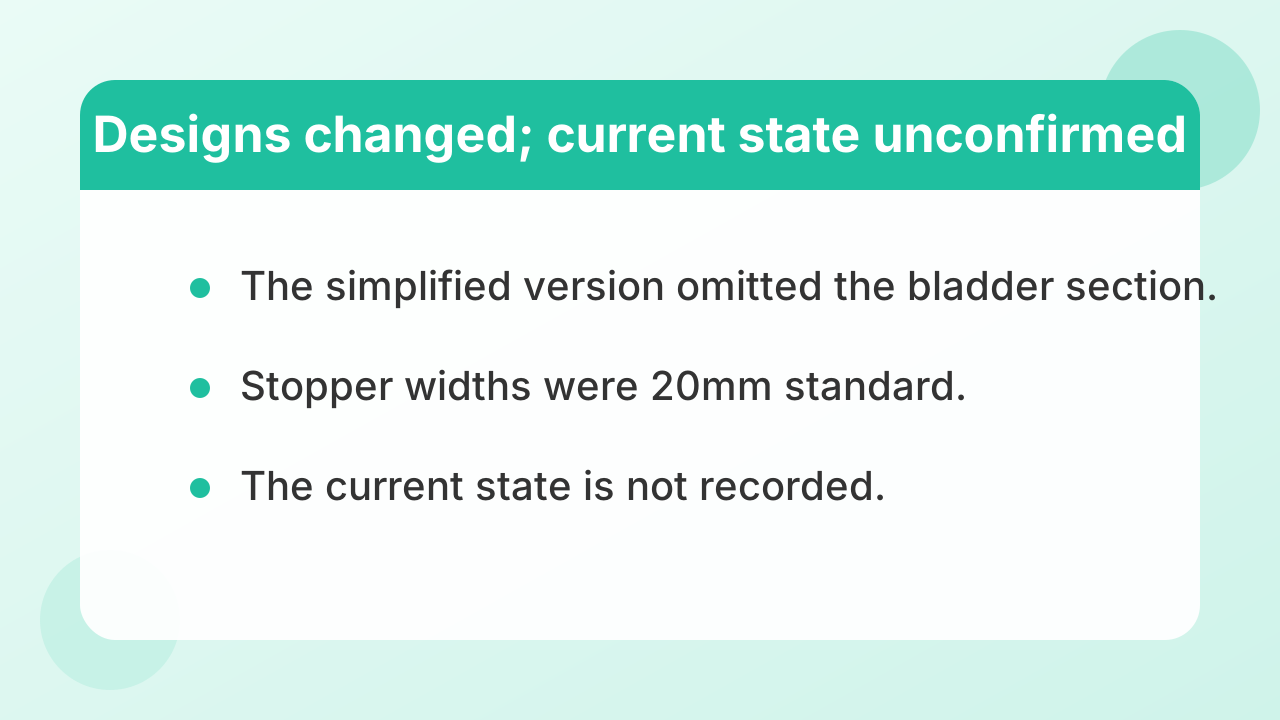
| Oct 2017 | The full design included a bladder section; the simplified version omitted it. |
| Jul 2018 | A flexible spiral chip prompted plans for shapes targeting different prostate areas. |
| Apr 2019 | After consulting a patent adviser, Mr. Okada decided against seeking an electrode-chip patent. |
| Oct 2020 | The spring-stent proposal measured about 20mm-35mm long, with a maximum diameter of 10mm. |
| Nov 2023 | A gourd-shaped prototype spread tubing in four directions while leaving a central urine channel. |
| Nov 2023 | A trademark application included medical devices and sexual aids among its designated categories. |
| Oct 2024 | Patent advice led to plans for an application covering selected wire-based products. |
| Apr 2025 | Manufacturing limits restricted the new composite wire mainly to designs without an external thread. |
| Dec 2025 | Stopper widths were 20mm standard, with 15mm, 18mm, and 25mm also described. |
The diary does not say what the current state is.
OK Prostate Chip products related to prostate chip medical use
No current product is directly tied to this topic.
Common worries about prostate chip medical use
The reader questions concern electrical limits and whether spring designs could become useful medical devices.
"Could a two-electrode chip be suitable for medical use?"
In an entry published in December 2018, a customer requested a rectal chip containing two electrodes. Mr. Okada warned that moisture could alter current flow; enema fluid could even create a short circuit. He proposed a different electrode arrangement, but could not judge compatibility with the customer’s treatment device.
The diary does not record whether that requested arrangement was supplied or tested. Mr. Okada refused requests from people without electrical-stimulation experience and warned that the amount of electricity could be life-threatening.
(Source: ok-lab's diary, published December 2018)
https://ok-lab.hatenablog.com/entry/20181208/1544250742
"Why limit medical use to one electrode per opening?"
In an entry published in April 2019, a reader challenged Mr. Okada’s single-electrode approach and wanted two electrodes near the prostate. The reader described discomfort when current crossed different tissues and argued for a purpose-built controller. Mr. Okada acknowledged lacking the ability to build a complete electrode system with polarity control (not explained in the diary).
His one-electrode-per-opening policy was a compromise for adapting ordinary massage-device controllers. The diary does not record a purpose-built system being supplied to that reader.
(Source: ok-lab's diary, published April 2019)
https://ok-lab.hatenablog.com/entry/2019/04/20/144337
"Could tighter coils make prostate chip medical use possible?"
In an entry published in May 2020, a reader proposed a coil design inspired by a heart stent. In a follow-up, the same reader asked whether closer spacing would reduce pressure on the urethral lining. Mr. Okada thought tissue entering an earlier prototype’s folds prevented useful prostate pressure.
He reported heart failure symptoms (not explained in the diary) after about half a day with prototype 4; these eased after removal. He suspected a connection without establishing the cause, and found that the resin cracked under strong bending. His reply was that closer coils might reduce irritation but could also pinch tissue; he planned further prototypes.
(Source: ok-lab's diary, published May 2020)
https://ok-lab.hatenablog.com/entry/2020/05/23/132040
Buying from outside Japan
OK Lab ships internationally to countries covered by Japan Post's EMS courier service. Overseas orders are paid in advance by PayPal. Each order carries a ¥400 (about $3 at ¥156 = $1, rate as of 2026-09-04) handling fee, and EMS shipping is charged on top. These terms come from OK Lab's official sales-terms page (written here as plain text, not a link: ok-lab.net/docs/law), checked on September 7, 2026; confirm them on the official store before you order, because they can change.
Summary of this article
| What you wanted to know | The answer |
|---|---|
| What is the main answer? | Medical possibilities are discussed; treatment effectiveness is not established in these entries. |
| What is this product? | A Japanese urethral device made by OK Lab, with prices in JPY. |
| What do the technical terms mean? | Stents support passages; electrodes provide electrical contact; balloon catheters drain urine. |
| What happened in the reported cases? | Personal tests included inflammation, discomfort, design changes, and hoped-for medical applications. |
| How did the maker respond? | He limited claims, changed processing, and acknowledged design and electrical constraints. |
| What changed over time? | Development moved through different shapes, materials, retention designs, and intellectual-property plans. |
| Is a current treatment product identified? | No current product is directly tied to this topic. |
| What did readers ask? | They questioned electrode arrangements and proposed improvements to spring designs. |
| Can people outside Japan order? | The stated terms are advance PayPal payment, a handling fee, and additional EMS shipping. |
Source: ok-lab's diary (Okada Comfortable Life Laboratory). The original entries are in Japanese; quotations on this page are translated. Photos and videos are on the original entries.
This article is a summary of the maker's development diary. The product is not a medical device and no result is guaranteed. If anything feels wrong or worries you, see a doctor. Prices, specifications and cautions change, so confirm the latest information on the official blog and the official site. Questions about ordering and shipping go to the seller.