![Will a larger chip fit and stay put? | Size alone does not settle either question [OK Prostate Chip]](/img/a/T0533/eyecatch.svg)
This page is based on entries from "ok-lab's diary" (https://ok-lab.hatenablog.com/), the Japanese development diary written by Mr. Okada, founder of OK Lab, a small company in Japan (Okada Comfortable Life Laboratory). Only the entries about "chip thickness, lobe size, and extra-large designs" are summarized here, in order of publication. Past prices and sizes are as written at the time. Current prices come from the official product list (retrieved September 4, 2026). Quotations are translated from Japanese.
This article is about larger OK Prostate Chip designs, and summarizes the maker's tests and limits. It discusses fit, breakage, shapes, materials, customer questions, related products, and buying from outside Japan.
Note: This page is a personal reading log by someone with no connection to the maker or the seller. It reflects the source entries as of their publication dates and makes no guarantee of accuracy or safety. The product is not a medical device; talk to a doctor about any health decision. Check the official site for current information. This page contains advertising.
In short
- Larger chips sometimes slipped out, failed to fit, or broke; extra width did not guarantee stability.
- The maker explored different shapes and materials, while acknowledging limits on size, fit, and strength.
- Related products remain listed; historical custom sizes are unconfirmed.
If you see blood in your urine, even a small amount or for the first time, do not wait and see. See a urologist right away.
If you suddenly cannot urinate, or the device cannot be removed, do not try to fix it yourself. Go to a medical facility, including emergency care, immediately.
About this product

The OK Prostate Chip is a small device that is placed in the urethra (the urine passage) so that it acts on the prostate; the maker sells it in several shapes, sizes and materials. It is made and sold by OK Lab (Okada Comfortable Life Laboratory), a small company in Japan, through its own online store, and prices are in Japanese yen (JPY).
The maker's development diary, "ok-lab's diary", is written in Japanese. This page is an English summary of it, and every quotation is translated. OK Lab ships internationally, so readers outside Japan can order (see "Buying from outside Japan" below).
Product names on this page are plain-English descriptions. The official Japanese product name is shown once in the product table so you can find the same item in the store.
Before you read: key terms
| Term | Plain-English meaning |
|---|---|
| Lobe | An enlarged section of a chip, intended to add fullness or affect where it stays. |
| Waist | A narrowed section between larger parts, used in some designs to engage a sphincter. |
| Sphincter | A muscle boundary used as a holding point in some chip designs. |
| Bulbar urethra | A wider part of the urine passage where drifting chips may settle and some auxiliary chips sit. |
| Stopper | A part intended to resist movement toward the bladder; an enlarged end lobe may not achieve this. |
| Resin | A material used to form chip parts, increase their dimensions, or join pieces together. |
| Twin chip | Two chips joined face to face for extra thickness, with gaps intended to preserve urine flow. |
What happens: larger prostate chips
The OK Prostate Chip is a small device placed in the urethra (urine passage) to act on the prostate. Larger lobes (enlarged sections) were intended to add fullness in the prostate area or help a chip stay in place. Some designs extended toward the bladder or the bulbar urethra (a wider part of the urine passage). The diary discusses width, thickness, and lobe position separately, with different results for different shapes.
A larger chip still slipped out during the maker's tests
In an entry published in January 2018, Mr. Okada described a linked prototype with only its prostate section enlarged and an 8 mm gap. He expected the extra size to resist slipping, but writes that it came out surprisingly easily. The design remained under consideration for further testing before a decision about sale.
No matching product can be confirmed on the current list. Mr. Okada treated the larger shape as an unresolved experiment.
(Source: ok-lab's diary, published January 2018)
https://ok-lab.hatenablog.com/entry/20180111/1515662782
A longer prostate chip proved difficult to remove during separate tests
In an entry published in January 2018, Mr. Okada also described tests of a long glass chip. He writes that it could not be removed on two occasions, involving the earlier thread attachment. He eventually got it out, after considering seeking urological care.
Despite previously announcing cancellation, he announced a release with a revised thread attachment. Mr. Okada warned that this design could damage the sphincters (muscle boundaries around the passage) and was unsuitable for beginners or intermediate users.
(Source: ok-lab's diary, published January 2018)
https://ok-lab.hatenablog.com/entry/20180111/1515662782
A larger chip's narrow waist traded less slipping for greater strain
In an entry published in May 2018, a customer asked why a glass semi-long chip slipped more than a linked resin model. Mr. Okada called glass much more slippery than resin and said an ordinary semi-long chip typically slipped halfway into the bulbar urethra. For a sharply narrowed waist (the section between larger parts), he reported no slipping except during urination.
He warned that this special shape strained the sphincter, describing about half a day as its continuous-wear limit. No matching product can be confirmed on the current list. He suggested a longer resin custom chip as an alternative to slippery glass.
(Source: ok-lab's diary, published May 2018)
https://ok-lab.hatenablog.com/entry/20180519/1526708081
The maker still warned of breakage with thicker prostate chip construction
In an entry published in January 2019, a customer reported that an enlarged-lobe chip had broken at its waist. The customer wanted a broader shape without that narrow section. Mr. Okada made a sturdier version.
No matching product can be confirmed on the current list. Mr. Okada cautioned that even the stronger replacement could still break.
(Source: ok-lab's diary, published January 2019)
https://ok-lab.hatenablog.com/entry/2019/01/26/152042
A larger chip kept the standard short model's price
In an entry published in December 2019, Mr. Okada introduced an experimental short chip (play version 1). It measured about 33 mm long and 11 mm wide, with two places to engage a sphincter. Its price matched the standard short chip; no yen amount was given.
No matching product can be confirmed on the current list. Mr. Okada suggested this version might appeal to customers who liked the serrated resin design.
(Source: ok-lab's diary, published December 2019)
https://ok-lab.hatenablog.com/entry/2019/12/07/162608
A larger chip marked L could exceed another range's S
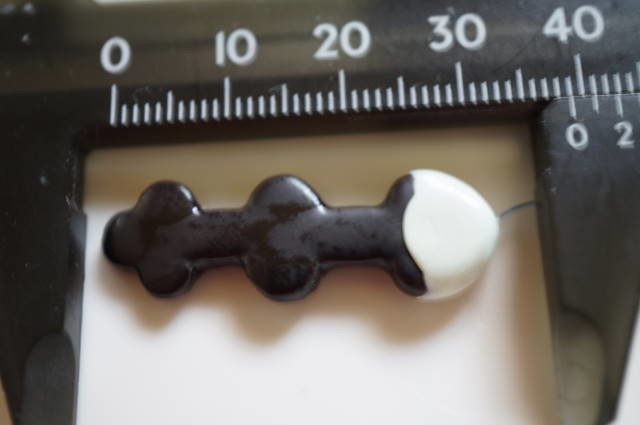
In an entry published in February 2021, a customer reported that a semi-long L with added bumps would not fit. Earlier purchases had fitted, but this model caught near the opening and caused increasing pain. Mr. Okada said the semi-long L was deliberately oversized and probably wider than the long S.
The diary does not record whether this L chip eventually fitted. Mr. Okada explained that short L and semi-long L answered requests for large chips at lower prices.
(Source: ok-lab's diary, published February 2021)
https://ok-lab.hatenablog.com/entry/2021/02/13/121440
A larger chip's rear end blocked passage for several customers
In an entry published in April 2022, Mr. Okada reported several complaints that the extra-large A design would not fit. He described it as larger than the long L four-point twist, with the rear end causing most reported failures. He also writes that he struggled with it himself.
No matching product can be confirmed on the current list. Mr. Okada limited his suggestion to people who could already accommodate the long L four-point twist comfortably.
(Source: ok-lab's diary, published April 2022)
https://ok-lab.hatenablog.com/entry/2022/04/23/123121
A larger chip preceded the maker's reported heart-failure episode
In an entry published in January 2024, Mr. Okada described testing an enlarged-middle prototype about 13.3 mm wide. He writes that it kept his prostate area expanded to 13 mm and that heart failure followed after bedtime. He attributed the episode to the large chip and reported recovering within several hours after it was removed. No matching product can be confirmed on the current list.
(Source: ok-lab's diary, published January 2024)
https://ok-lab.hatenablog.com/entry/2024/01/20/122910
The maker's answer to larger prostate chips
The maker changed shapes and construction methods, but repeatedly identified limits that extra size could not solve.
A larger chip request prompted an additional, shorter comparison sample
In an entry published in May 2018, a customer selected a 65 mm prototype with a 12 mm rear width. Its lobes were 9.5 mm wide and its thickness was 4.5 mm. Mr. Okada also offered a 58 mm sample with a 10.5 mm rear width, 9.5 mm lobes, and 4 mm thickness.
No matching product can be confirmed on the current list. Mr. Okada cautioned that the longer design's three-lobe section might exceed the customer's prostate passage length.
(Source: ok-lab's diary, published May 2018)
https://ok-lab.hatenablog.com/entry/20180505/1525509161
Larger lobes did not make a continuous shape an effective stopper
In an entry published in March 2019, a customer requested a larger motorized chip with an enlarged final lobe for stability. Mr. Okada said a 13 mm or 14 mm end lobe offered little stopper (movement-blocking part) effect.
The customer then withdrew the final-lobe request and asked for a thicker version of the earlier design. The diary does not record how the revised chip felt in use. No matching product can be confirmed on the current list. Mr. Okada cautioned that even a 15 mm continuous shape could be drawn toward the bladder.
(Source: ok-lab's diary, published March 2019)
https://ok-lab.hatenablog.com/entry/2019/03/30/160657
A request for a thicker prostate chip required adding resin around ceramic of a fixed size
In an entry published in March 2020, a customer requested a short ceramic chip with a 13 mm width. OK Lab responded with added resin (material used to build up chip parts) because the ceramic dimensions could not change. The diary does not record its fit in use.
No matching product can be confirmed on the current list. The maker's reply identified the fixed ceramic size as the limit on this request.
(Source: ok-lab's diary, published March 2020)
https://ok-lab.hatenablog.com/entry/2020/03/28/144043
A larger chip request met mold and glass-stock limits
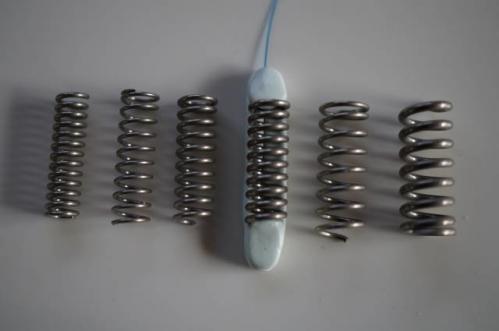
In an entry published in February 2021, a customer sought oversized linked chips after existing shapes slipped out. OK Lab replied that ceramic molds fixed the available sizes, while glass could not readily exceed the starting glass rod's dimensions. It proposed stainless-steel ring chips instead.
A February 2021 follow-up records the customer's continued preference for ceramic; staff proposed trying a paired design. Reinforcement would add 1–2 mm beyond the proposed 10 mm ring's size. OK Lab also cautioned that someone accommodating a flat 12 mm ceramic chip could struggle with a 7.5 mm ring.
(Source: ok-lab's diary, published February 2021)
https://ok-lab.hatenablog.com/entry/2021/02/13/121440
(Source: ok-lab's diary, published February 2021)
https://ok-lab.hatenablog.com/entry/2021/02/20/130830
If you see blood in your urine, even a small amount or for the first time, do not wait and see. See a urologist right away.
If you suddenly cannot urinate, or the device cannot be removed, do not try to fix it yourself. Go to a medical facility, including emergency care, immediately.
How larger prostate chips changed over time
| Published | What the diary said then |
|---|---|
| Jun 2018 | The enlarged-lobe chip moved from waiting orders to formal release. |
| May 2019 | Unexpected 11 mm ceramic short chips stayed put better in Mr. Okada's tests. |
| Jul 2020 | Slimmer double-twist tooling entered development because earlier pieces seemed too large. |
| Feb 2021 | Twin construction kept original width and length while increasing thickness. |
| May 2021 | A large linked build used four threads for strength. |
| Apr 2022 | Added bumps cost the base price plus ¥1,000 (about $6 at ¥156 = $1, rate as of 2026-09-04) excluding tax; rear dimensions stayed unchanged. |
| Jul 2023 | Custom lobes measured about 12 mm before drying and about 14 mm afterward. |
| Jun 2024 | An oversized linked prototype needed thicker resin because standard thickness seemed liable to break. |
OK Prostate Chip products related to larger prostate chips
The current list includes these related products, but gives no size options for confirming the historical builds.
The chips featured in these entries
| Product (official name) | Price incl. tax | Relation to this topic |
|---|---|---|
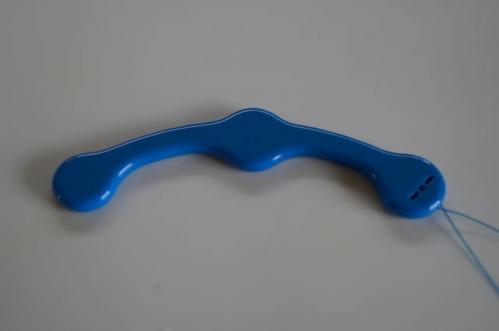
| Ceramic curved-twist semi-long chip (OKプロステートチップ 陶器素材セミロングタイプ コブラツイスト) | ¥5,500 (about $35 at ¥156 = $1, rate as of 2026-09-04) | In March 2020, a customer reported breakage of this model and asked about thicker replacements. |
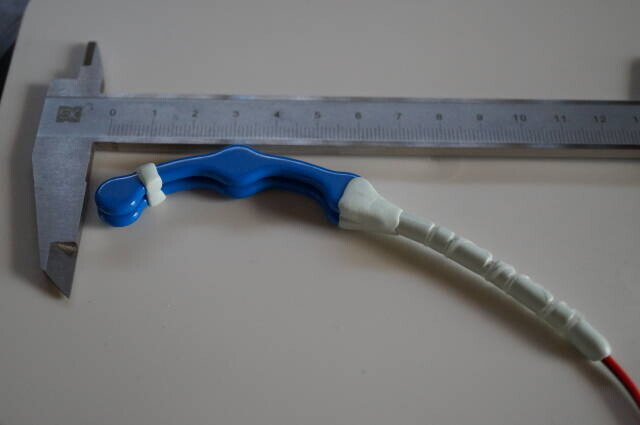
| Resin enlarged-lobe chip (OKプロステートチップ 覚醒タイプ(生体適合樹脂)) | ¥8,800 (about $56 at ¥156 = $1, rate as of 2026-09-04) | In December 2023, a customer named this chip when requesting a thicker twin build. |
The ceramic curved-twist semi-long chip is listed in OK Lab's own online store.
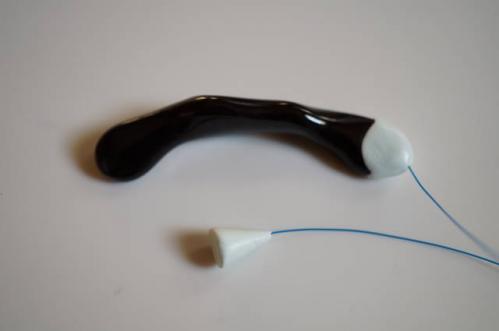
The single resin enlarged-lobe chip is listed in OK Lab's own online store.
(Source: ok-lab's diary, published March 2020)
https://ok-lab.hatenablog.com/entry/2020/03/14/141804
(Source: ok-lab's diary, published December 2023)
https://ok-lab.hatenablog.com/entry/2023/12/09/123055
Alternative chips mentioned in the diary
| Product (official name) | Price incl. tax | Relation to this topic |
|---|---|---|
| Short stainless-steel ring chip (OKプロステートチップ ステンレスリング ショートタイプ) | ¥3,300 (about $21 at ¥156 = $1, rate as of 2026-09-04) | In February 2021, OK Lab proposed this instead of oversized ceramic or glass pieces, while warning that round rings resisted passage. |
The short stainless-steel ring chip is listed in OK Lab's own online store.
(Source: ok-lab's diary, published February 2021)
https://ok-lab.hatenablog.com/entry/2021/02/13/121440
Common worries about larger prostate chips
The replies address individual shapes, with several fit and follow-up questions left unresolved.
"Can an anatomy chart determine the size of my prostate chip?"
In an entry published in May 2018, a customer asked for anatomical measurements to design a custom chip. Mr. Okada said he had no suitable reference diagram. He cautioned that individual differences, including prostate enlargement, made choosing dimensions from a diagram difficult.
(Source: ok-lab's diary, published May 2018)
https://ok-lab.hatenablog.com/entry/20180519/1526708081
"Which size of prostate chip is thickest when the motor is included?"
In an entry published in March 2020, a customer reported a ceramic curved-twist semi-long M broke after 2 insertions. A tip fragment remained inside and later passed during urination; the customer asked about thicker replacements. OK Lab offered a replacement as an initial defect, while Mr. Okada suggested a crack might have existed before shipping.
Mr. Okada called the long series thickest and L the largest size within each range. He described the 10 mm motor as about 11 mm wide and 5 mm thick; the replacement outcome is not recorded. His reply suggested it would fit this customer because a round 9 mm instrument fitted.
(Source: ok-lab's diary, published March 2020)
https://ok-lab.hatenablog.com/entry/2020/03/14/141804
"Can two layers be used to make a thicker prostate chip?"
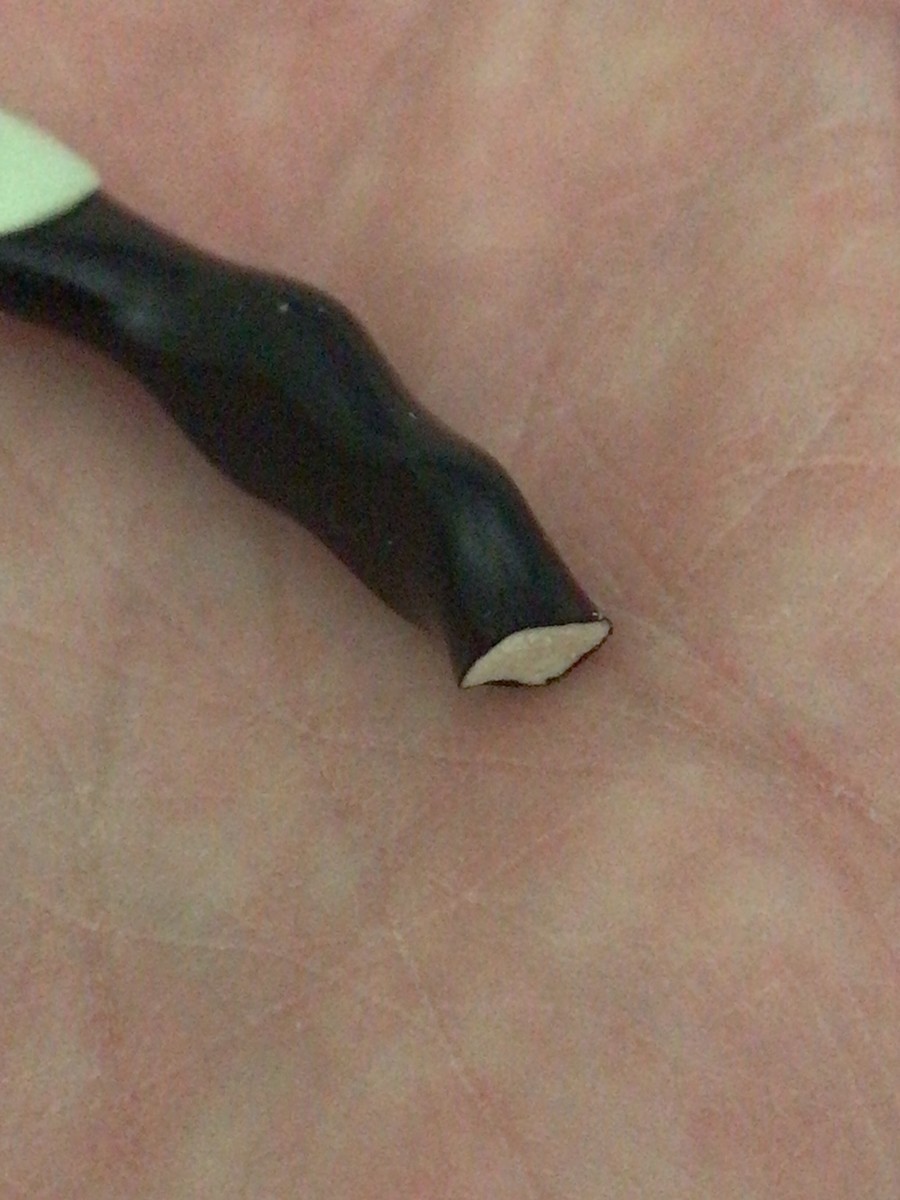
In an entry published in December 2023, a customer requested a twin chip (two joined chips intended to increase thickness). OK Lab's staff described construction with about 2 mm of resin between the faces. Mr. Okada completed a prototype whose gaps, he believed, preserved urine flow.
The diary does not record the customer's experience with it. No matching product can be confirmed on the current list. Staff favored spaced construction when extra thickness was the aim.
(Source: ok-lab's diary, published December 2023)
https://ok-lab.hatenablog.com/entry/2023/12/09/123055
Buying from outside Japan

OK Lab ships internationally to countries covered by Japan Post's EMS courier service. Overseas orders are paid in advance by PayPal. Each order carries a ¥400 (about $3 at ¥156 = $1, rate as of 2026-09-04) handling fee, and EMS shipping is charged on top. These terms come from OK Lab's official sales-terms page (written here as plain text, not a link: ok-lab.net/docs/law), checked on September 7, 2026; confirm them on the official store before you order, because they can change.
Summary of this article
| What you wanted to know | The answer |
|---|---|
| Does bigger solve the problem? | Extra size did not reliably prevent slipping or poor fit. |
| About this product: what is it? | A urethral device made and sold by OK Lab in Japan. |
| Key terms: what matters? | Width, thickness, lobes, and narrowed sections. |
| What happened? | Slipping, failed fit, breakage, and difficult removal were reported. |
| What did the maker suggest? | Different shapes and construction, with material limits. |
| What changed? | Shapes, thickness, materials, and reinforcement evolved. |
| Which products are listed? | Related ceramic, resin, and ring models. |
| What do the replies establish? | Several customer outcomes remain unrecorded. |
| How does overseas buying work? | Advance PayPal payment, a ¥400 (about $3 at ¥156 = $1, rate as of 2026-09-04) handling fee, and additional EMS shipping. |
Source: ok-lab's diary (Okada Comfortable Life Laboratory). The original entries are in Japanese; quotations on this page are translated. Photos and videos are on the original entries.
This article is a summary of the maker's development diary. The product is not a medical device and no result is guaranteed. If anything feels wrong or worries you, see a doctor. Prices, specifications and cautions change, so confirm the latest information on the official blog and the official site. Questions about ordering and shipping go to the seller.