![What could a hospital visit or chip removal cost? | Past bills vary widely [OK Prostate Chip]](/img/a/T0287/eyecatch.svg)
This page is based on entries from "ok-lab's diary" (https://ok-lab.hatenablog.com/), the Japanese development diary written by Mr. Okada, founder of OK Lab, a small company in Japan (Okada Comfortable Life Laboratory). Only the entries about "hospital consultation and device removal costs" are summarized here, in order of publication. Past prices and sizes are as written at the time. Current prices come from the official product list (retrieved September 4, 2026). Quotations are translated from Japanese.
Note: This page is a personal reading log by someone with no connection to the maker or the seller. It reflects the source entries as of their publication dates and makes no guarantee of accuracy or safety. The product is not a medical device; talk to a doctor about any health decision. Check the official site for current information. This page contains advertising.
In short
The diary records different bills for clinic visits, emergency removal, and hospital admission.
The maker encourages medical assessment and acknowledges that OK Lab cannot judge which hospital treatment is correct.
The latest hospital cost report in this material was published in May 2025.
If you see blood in your urine, even a small amount or for the first time, do not wait and see. See a urologist right away.
If you suddenly cannot urinate, or the device cannot be removed, do not try to fix it yourself. Go to a medical facility, including emergency care, immediately.
About this product
The OK Prostate Chip is a small device that is placed in the urethra (the urine passage) so that it acts on the prostate; the maker sells it in several shapes, sizes and materials. It is made and sold by OK Lab (Okada Comfortable Life Laboratory), a small company in Japan, through its own online store, and prices are in Japanese yen (JPY). The maker's development diary, "ok-lab's diary", is written in Japanese. This page is an English summary of it, and every quotation is translated. OK Lab ships internationally, so readers outside Japan can order (see "Buying from outside Japan" below). Product names on this page are plain-English descriptions. The official Japanese product name is shown once in the product table so you can find the same item in the store.
Before you read: key terms
| Term | Plain-English meaning |
|---|---|
| Urethra | The urine passage, where the device is placed and where some reported blockages occurred. |
| Urologist | A doctor customers consulted for urinary symptoms or a retained device. |
| Urethral dilation | Treatment for a narrowed urine passage; Mr. Okada used its listed charge as a pricing reference. |
| Bladder washing | A treatment reported for clearing remaining ceramic fragments from the bladder. |
| Endoscope | A viewing instrument used during examinations and removal in these reports. |
| Forceps | Medical grasping tools used during reported device removals. |
| Antibiotics | Medicines prescribed after several removals; the diary also discusses them as treatment for bladder inflammation. |
| General anesthesia | Used during the reported inpatient operation. The diary does not explain this. |
| CT scan | A test included in reported hospital bills. The diary does not explain this. |
| National Health Insurance | Insurance named in the December 2022 payment report. The diary does not explain this. |
What happens: hospital visit and chip removal costs
The OK Prostate Chip is a device placed in the urethra (the urine passage) to stimulate the prostate. The hospital costs discussed here concern examinations for symptoms and treatment when a device becomes stuck in the urethra or bladder. In these reports, doctors examined customers, removed retained devices, and sometimes prescribed medicine afterward. The diary includes clinic visits, emergency treatment, and admission to a hospital, each with its own reported bill.
Historical urologist visit costs helped Mr. Okada consider product pricing
In an entry published in October 2017, Mr. Okada discussed urethral dilation (treatment for a narrowed urine passage). He cited 180 points for code J 066, with each point worth ¥10 (about $0 at ¥156 = $1, rate as of 2026-09-04), giving a listed charge of ¥1,800 (about $12 at ¥156 = $1, rate as of 2026-09-04).
His example assumed a 30% patient share, stated as ¥540 (about $3 at ¥156 = $1, rate as of 2026-09-04). These figures came from the medical fee schedule he consulted that month. Mr. Okada used the comparison to help establish his original product pricing.
(Source: ok-lab's diary, published October 2017)
https://ok-lab.hatenablog.com/entry/20171020/1508465071
Bladder washing costs appeared as a separate daily charge
In another entry published in October 2017, Mr. Okada mentioned bladder washing as a medical treatment. He listed code J060, charged per day, at 60 points (¥600 (about $4 at ¥156 = $1, rate as of 2026-09-04)). That paragraph supplied no customer bill, removal outcome, or patient payment share for this charge.
(Source: ok-lab's diary, published October 2017)
https://ok-lab.hatenablog.com/entry/20171022/1508644866
Chip removal costs included a substantial surgical charge in May 2018
In an entry published in May 2018, a customer reported a detached thread and a custom chip retained in the bladder. A general hospital removed it using an endoscope (a viewing instrument) and forceps (medical grasping tools).
The customer reported paying about ¥29,000 (about $186 at ¥156 = $1, rate as of 2026-09-04) as a 30% share, including ¥25,000 (about $160 at ¥156 = $1, rate as of 2026-09-04) for surgery. The follow-up described a return to usual health, and Mr. Okada declined to add a comment. No matching product can be confirmed on the current list.
(Source: ok-lab's diary, published May 2018)
https://ok-lab.hatenablog.com/entry/20180511/1526036007
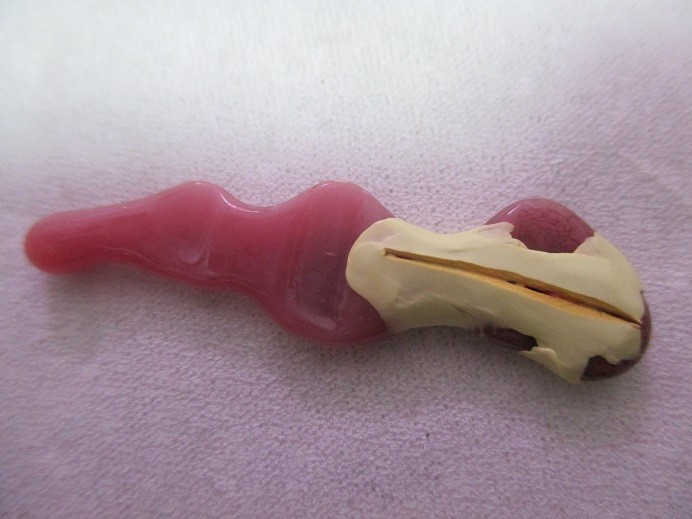
April 2022 chip removal costs included medicine after difficult treatment
In an entry published in April 2022, a customer sought treatment after a chip became trapped in the bladder. The customer described blood in the urine, leakage, and difficulty continuing work before seeking care.
Hospital treatment eventually succeeded, and antibiotics (medicine prescribed after treatment) were supplied. The reported cost was about ¥8,000 (about $51 at ¥156 = $1, rate as of 2026-09-04); the paragraph did not specify an insurance share. Mr. Okada acknowledged the customer's distress and said the reported position inside the bladder was new information to him.
(Source: ok-lab's diary, published April 2022)
https://ok-lab.hatenablog.com/entry/2022/04/02/123050
August 2022 chip removal costs included surgery covered by insurance
In an entry published in August 2022, a customer reported connected chips stuck together inside the urethra. Small clinics could not provide removal because they lacked the necessary grasping equipment.
A larger specialist hospital eventually completed removal using a bladder camera and forceps. The customer reported about ¥8,000 (about $51 at ¥156 = $1, rate as of 2026-09-04), with insurance applied despite the treatment being classified as surgery; antibiotics and painkillers were prescribed. The customer described some postoperative bleeding and pain, and Mr. Okada acknowledged the danger associated with connected chips.
(Source: ok-lab's diary, published August 2022)
https://ok-lab.hatenablog.com/entry/2022/08/20/122920
Emergency chip removal costs were reported separately later that August
In a separate entry published in August 2022, a customer reported increasing pain and fresh bleeding after a chip became stuck. The customer attended an emergency department, where an initial removal attempt failed.
Removal succeeded 20 minutes after the endoscopic treatment began. The customer reported a bill of about ¥23,000 (about $147 at ¥156 = $1, rate as of 2026-09-04), explicitly identified as the 30% patient share, and later decided to stop using chips. Mr. Okada praised the customer's prompt decision to seek emergency care.
(Source: ok-lab's diary, published August 2022)
https://ok-lab.hatenablog.com/entry/2022/08/27/123001
A small clinic reported chip removal costs of ¥27,000 (about $173 at ¥156 = $1, rate as of 2026-09-04)
In an entry published in March 2024, a customer described removal at a small local urology clinic. The doctor initially considered referral to a general hospital because the device was unfamiliar.
The clinic nevertheless completed removal with an endoscope, and the visit's treatment took less than 30 minutes. The customer reported paying ¥27,000 (about $173 at ¥156 = $1, rate as of 2026-09-04); the paragraph did not state an insurance share. Mr. Okada interpreted the account as evidence that an individual clinic could sometimes respond after discussing the situation.
(Source: ok-lab's diary, published March 2024)
https://ok-lab.hatenablog.com/entry/2024/03/02/123027
The maker's answer to hospital visit and chip removal costs
The maker's replies encourage medical assessment, useful information for clinicians, and discussion of treatment choices.
Urologist visit costs formed part of Mr. Okada's reassurance
In an entry published in August 2020, a customer asked about discomfort after urination and a feeling that urine remained. Embarrassment and the inconvenience of attending a clinic had contributed to the customer's reluctance to seek care.
Mr. Okada estimated that even an initial visit, including medicine, would cost within ¥3,000 (about $19 at ¥156 = $1, rate as of 2026-09-04). This was his estimate; the diary does not record whether the customer attended or what they paid. Mr. Okada encouraged consulting a urologist rather than continuing to worry about the symptoms.
(Source: ok-lab's diary, published August 2020)
https://ok-lab.hatenablog.com/entry/2020/08/08/130037
Higher chip removal costs prompted discussion of another medical opinion
In an entry published in August 2023, a customer reported referral after a clinic could not remove a trapped ceramic chip. Another clinic removed the ceramic device in fragments and provided subsequent bladder washing.
The customer listed ¥48,000 (about $307 at ¥156 = $1, rate as of 2026-09-04) for fragmentation and removal, plus ¥2,200 (about $14 at ¥156 = $1, rate as of 2026-09-04) × 5 for washing. The stated total was ¥59,000 (about $378 at ¥156 = $1, rate as of 2026-09-04) plus consultation charges. The diary does not record the result of the planned follow-up examination. Mr. Okada suggested seeking another medical opinion about possible alternatives when bladder surgery was proposed.
(Source: ok-lab's diary, published August 2023)
https://ok-lab.hatenablog.com/entry/2023/08/05/122956
Inpatient chip removal costs led Mr. Okada to acknowledge limits
In an entry published in June 2024, a customer reported immediate admission after assessment at a general hospital. Removal involved general anesthesia and a stay of 2 nights and 3 days, with a reported payment of ¥110,000 (about $704 at ¥156 = $1, rate as of 2026-09-04) after insurance applied.
Mr. Okada described this as the first removal report he had received involving both admission and general anesthesia. He acknowledged that he could not explain the doctor's decision. He said OK Lab could provide information but could not determine which hospital's treatment was correct. Mr. Okada encouraged customers to understand the doctor's explanation and consider their wishes about treatment.
(Source: ok-lab's diary, published June 2024)
https://ok-lab.hatenablog.com/entry/2024/06/01/123036
May 2025 chip removal costs followed advice to seek care
In an entry published in May 2025, a customer asked about a stuck custom looped device; Mr. Okada initially offered retrieval suggestions. When the follow-up revealed a different situation, the maker directed the customer toward medical care. The device and its thread had reached the bladder; the customer reported CT and urine testing followed by bladder-camera removal.
Waiting and treatment together took about 5 hours, with a bill of ¥34,000 (about $218 at ¥156 = $1, rate as of 2026-09-04). No matching product can be confirmed on the current list. The maker advised showing clinicians the diary photograph and explaining the device's construction.
(Source: ok-lab's diary, published May 2025)
https://ok-lab.hatenablog.com/entry/2025/05/03/122907

If you see blood in your urine, even a small amount or for the first time, do not wait and see. See a urologist right away.
If you suddenly cannot urinate, or the device cannot be removed, do not try to fix it yourself. Go to a medical facility, including emergency care, immediately.
How hospital visit and chip removal costs changed over time
| Published | What the diary said then |
|---|---|
| Oct 2017 | Mr. Okada used a historical treatment charge when considering product prices. |
| May 2018 | A removal report separated the surgery charge from the overall patient payment. |
| Aug 2020 | Mr. Okada estimated an initial consultation with medicine within ¥3,000 (about $19 at ¥156 = $1, rate as of 2026-09-04). |
| Dec 2021 | A short bladder-camera examination and removal was billed as surgery. |
| Aug 2022 | An emergency removal report specified the patient's 30% payment share. |
| Dec 2022 | A first clinic visit resulted in removal classified as treatment rather than surgery. |
| Aug 2023 | Ceramic fragmentation and repeated bladder washing produced separate charges. |
| Jun 2024 | A report added inpatient removal under general anesthesia. |
| Feb 2025 | The reported overall bill included imaging, consultation, and medicine beyond surgery. |
| May 2025 | A customer reported about five hours for tests, waiting, and removal. |
The diary does not say what the current state is.
OK Prostate Chip products related to hospital visit and chip removal costs
No current product is directly tied to this topic.
Common worries about hospital visit and chip removal costs
Customers asked whether waiting or another approach could resolve a retained device before surgery became necessary.
"Can chip removal costs be avoided by waiting?"
In an entry published in December 2021, a customer asked whether a missing device might pass within about 1 week. The maker initially offered tentative ideas about retrieval, but the customer's subsequent messages reported no progress.
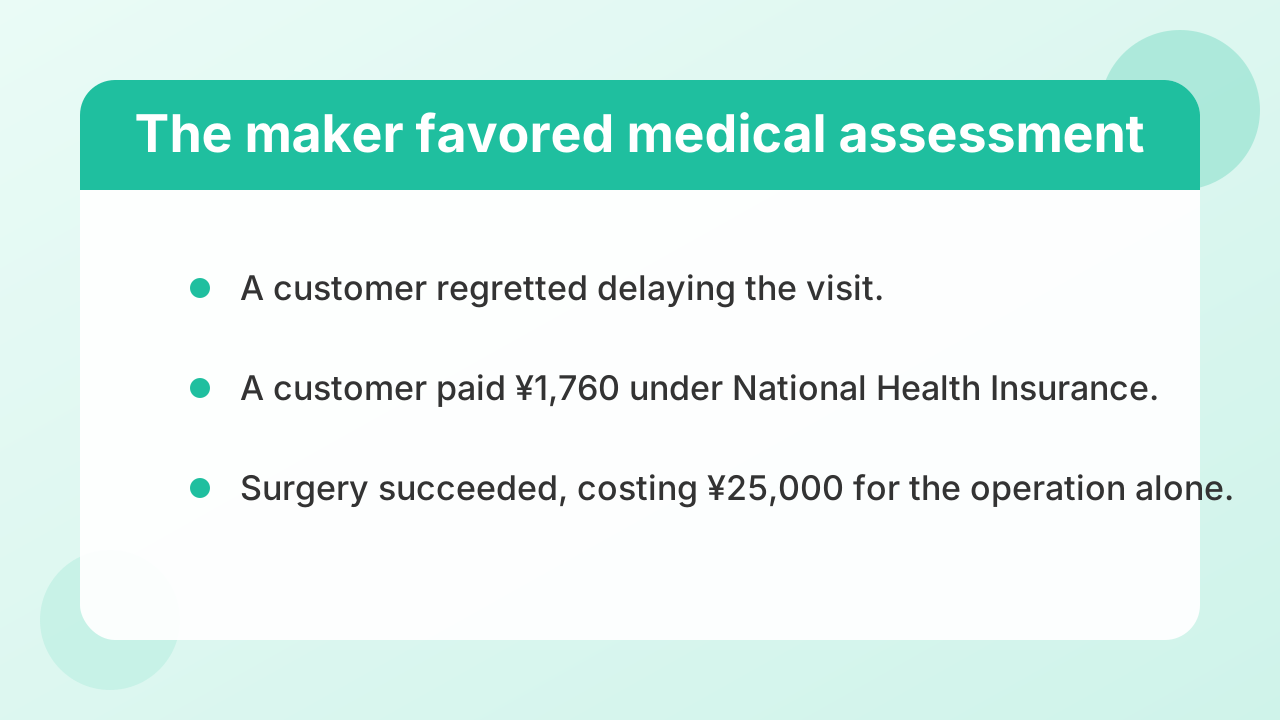
Hospital removal eventually succeeded, with the bladder-camera examination taking about 10 minutes. The customer reported charges above ¥30,000 (about $192 at ¥156 = $1, rate as of 2026-09-04) because removal counted as surgery. The customer regretted delaying the visit after several days of distress. The maker's initial reply also identified medical assessment as the safer option when the customer lacked confidence in resolving the problem.
(Source: ok-lab's diary, published December 2021)
https://ok-lab.hatenablog.com/entry/2021/12/25/123556
"Can chip removal avoid a surgical bill?"
In an entry published in December 2022, a customer asked about a possible solution for a device stuck near the urethral opening. The maker considered the idea theoretically possible but expressed concern about injury and favored medical assessment.
A clinic removed the device at the customer's first visit, and the customer later reported recovery. The reported payment was ¥1,760 (about $11 at ¥156 = $1, rate as of 2026-09-04) under National Health Insurance. The customer was prescribed 1 week of antibiotics; the material does not state whether the payment included the medicine. Mr. Okada described the outcome as treatment rather than surgery, while acknowledging favorable circumstances. The maker's reply advised seeing a doctor because the customer's proposed intervention raised safety concerns.
(Source: ok-lab's diary, published December 2022)
https://ok-lab.hatenablog.com/entry/2022/12/24/122944
"Can chip removal costs be avoided once surgery is planned?"
In an entry published in February 2025, a customer asked about avoiding scheduled surgery after the device and thread disappeared. The maker could not identify a reliable alternative and supported the treating doctor's plan.
Surgery succeeded, costing ¥25,000 (about $160 at ¥156 = $1, rate as of 2026-09-04) for the operation alone. The customer reported about ¥35,000 (about $224 at ¥156 = $1, rate as of 2026-09-04) including CT, X-rays, the initial consultation, antibiotics, and other charges. The follow-up described infection symptoms and said the hospital would refuse another similar removal. The maker advised sharing a photograph so clinicians could understand the device's structure.
(Source: ok-lab's diary, published February 2025)
https://ok-lab.hatenablog.com/entry/2025/02/22/122939
Buying from outside Japan
OK Lab ships internationally to countries covered by Japan Post's EMS courier service. Overseas orders are paid in advance by PayPal. Each order carries a ¥400 (about $3 at ¥156 = $1, rate as of 2026-09-04) handling fee, and EMS shipping is charged on top. These terms come from OK Lab's official sales-terms page (written here as plain text, not a link: ok-lab.net/docs/law), checked on September 7, 2026; confirm them on the official store before you order, because they can change.
Summary of this article
| What you wanted to know | The answer |
|---|---|
| What is the overall cost picture? | The diary records substantially different bills across individual cases. |
| What is this product? | A device placed in the urethra, made and sold by OK Lab in Japan. |
| What do the medical terms mean? | They describe examinations, removal instruments, treatment, and payment arrangements mentioned in the reports. |
| What kinds of hospital bills appear? | Clinic treatment, emergency removal, surgery, and inpatient care. |
| What does the maker suggest? | Medical assessment, information for clinicians, and discussion of treatment choices. |
| What changed over time? | Later reports added fragmentation, inpatient surgery, and further itemized bills. |
| Is a purchase directly related to hospital costs? | No current product is directly tied to this topic. |
| What concerned customers? | Waiting, avoiding surgery, and getting help when a device remained stuck. |
| How does overseas ordering work? | Advance PayPal payment, EMS shipping, and the stated handling fee. |
Source: ok-lab's diary (Okada Comfortable Life Laboratory). The original entries are in Japanese; quotations on this page are translated. Photos and videos are on the original entries.
This article is a summary of the maker's development diary. The product is not a medical device and no result is guaranteed. If anything feels wrong or worries you, see a doctor. Prices, specifications and cautions change, so confirm the latest information on the official blog and the official site. Questions about ordering and shipping go to the seller.